Getting featured on Google Discover is both super exciting and nerve-wracking. But some publishers have built a system that now consistently makes $1,000 per week with a Google Discover traffic monetization strategy. No tricks, no shortcuts, just a news site case study that shows what actually works.
 Zaeem Insha
 Ramzan Jani
News bloggers, Google Discover and SEO experts
Our core expertise includes SEO-driven content production, keyword research, and performance-focused monetization strategies for news sites. We started working with Adsterra in early 2025, in the middle of that AI Overviews and ChatGPT chaos. By then, we’d already figured out how to get featured on Google Discover. But we were still scratching our heads about how to monetize those pesky traffic spikes.
This case study is about how we actually make money with Google Discover traffic. It’s legit, safe, and not ruining user experience.
What is Google Discover?
Google Discover is a personalized content feed in the Google mobile app and homepage, which is not reactive to user queries (unlike traditional search). It proactively suggests articles, videos, and updates based on a user’s interests.
Discover doesn’t care too much about backlinks when it comes to fresh news. What it really cares about is timing, relevance, and whether people actually bother to tap and read. It acts proactively, with regard to your preferences (search, YouTube, etc.), location, and even device.
Why we picked the news niche
We didn’t choose the News niche because it’s the most glamorous. We chose it because it’s how Discover behaves. For us, the News niche ticked important boxes:
- Trending topics can generate massive traffic quickly
- Most Discover users are on mobile
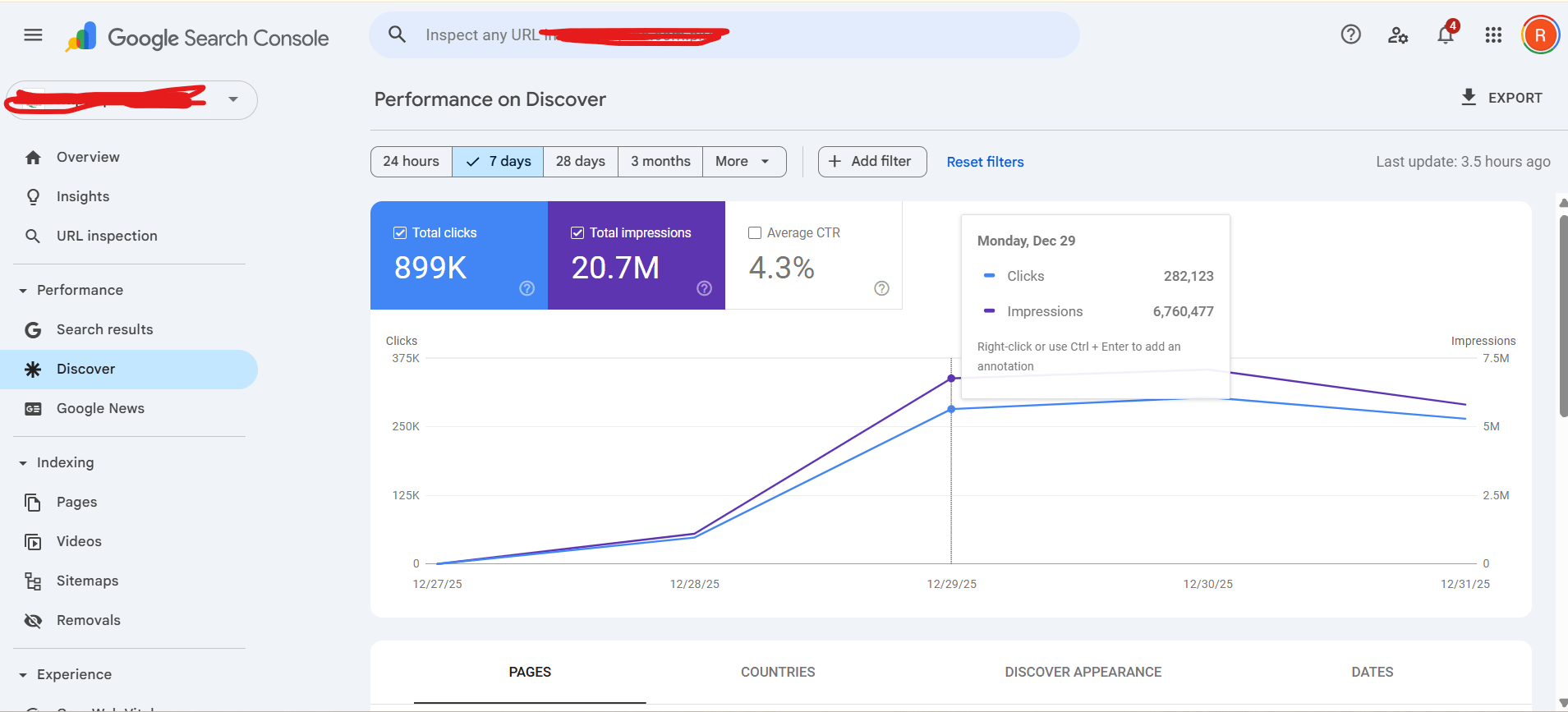
That makes it perfect for quickly testing a news site Google Discover traffic strategy. You don’t have to wait months to see if something works; you usually know within days or even 24 hours, as shown on this Search Console screenshot (performance report):
Traffic profile: the Google Discover earning foundation
Here’s a snapshot of our site:
- About 70% of our traffic comes from Google Discover
- The remaining 30% comes from Google Search
When it comes to devices, mobile is where it’s at:
- Roughly 90% of traffic is on mobile
- Around 8% is on desktop
- The rest are on tablets
Our top GEO is Pakistan, and we publish in English. On average, we publish 20+ articles per day. That’s a pace that’s not for everyone, but for Discover, consistency beats perfection unless you forget about value for readers. But we’ll get back to this point later.
How to get traffic from Google Discover fast?
Now this is where most people get Discover wrong. We don’t try to predict trends weeks in advance and then post as many articles as possible. We look for the momentum that’s already building.
To get Google Discover traffic faster, we:
- Manually check Google Discover feeds on multiple mobile devices to see what’s already trending
- Analyze competitors’ news sites that frequently appear in Discover
- Use SEMrush to check that search interest is actually on the rise
- Cross-check with Google Search suggestions
- Our focus is trend velocity, not static keywords.
If a topic is already moving in Discover and Search at the same time — that’s our cue. Only keywords with active search interest or Discover potential are selected. We publish the same news quickly with a better structure, clearer language, and stronger visuals. But we never post AI slop or simply poor-quality content.
Tools and methods we use to check trending topics
- SEMrush (keyword velocity & competitors)
- Manual Discover feed monitoring
- Google Search suggestions
- Real-time competitor analysis
- Social signals (news virality indicators)
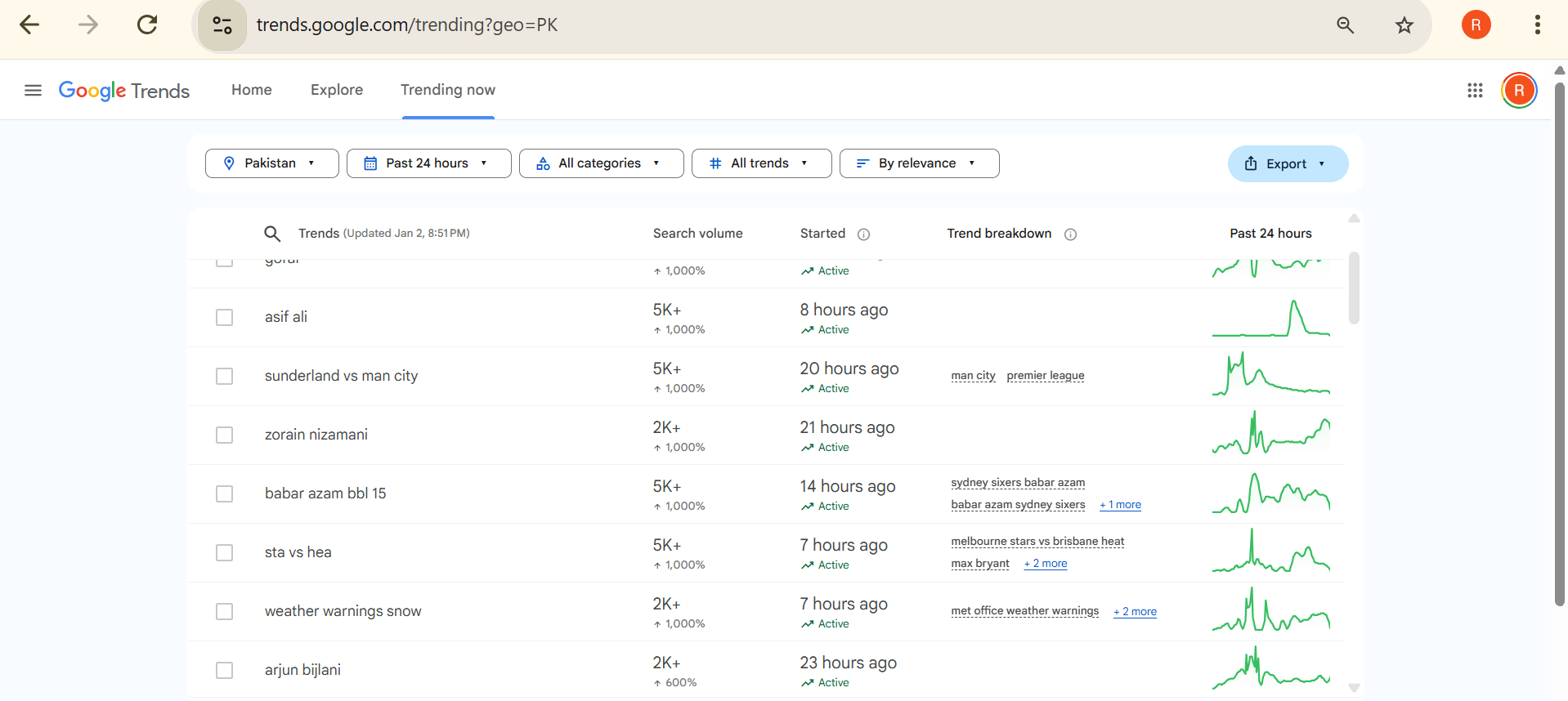
- Google Trends with precise location
Content writing tips for Google Discover presence
Yes, we use AI, but no, we don’t let it publish on its own. ChatGPT helps us move faster when we’re covering breaking topics, but every article still gets human editing, and it’s a must.
Our typical workflow looks like this:
We feed the tool a trending keyword and a competitor article for context. Then we ask for a clean, original draft with better structure and clarity. After that, a human editor steps in to fact-check, rewrite any awkward bits, improve the headline, and format the article for mobile readers.
Nothing goes live without a human eye on it. That’s not negotiable if you want Discover traffic to stick around. Our typical ChatGPT prompt structure looks like this:
“This keyword is trending on Google right now. I want to write content about this topic. Below is a competitor article for reference. Please write a 100% original, SEO-friendly article that provides better structure, clarity, and value. Do not copy content. Keep it unique and helpful.”
Content curation: How to profit from reusing news
You can reuse the same viral topic, and this will pay off on Discover. To do it without risks of becoming a spammy source, use these rules we tested:
- Rewrite from a new angle
- Update facts and context
- Change headline structure
- Use fresh images
- Ensure 100% originality
One important note: never repost the same article word-for-word.
How to keep high CTR without cheap clickbait
Google Discover is based on user engagement. Here’s why decent click-through rates (CTR) are imperative for news makers. CTRs don’t equal clickbait: Google flags such content as misleading.
Our rule to keep high CTR without losing Google’s trust:
- Promise only what the article delivers.
- Use curiosity-driven but accurate headlines
- State a clear value in the first paragraph
- Use strong, high-quality but relevant images.
If users bounce quickly, Discover traffic drops — so balance is essential.
Things that really matter on Google Discover
Images
Discover is a visual beast. If your featured image looks generic or misleading, clicks will drop. We create custom featured images using Gemini AI, guided by specific prompts for each article. The goal isn’t to shock people, it’s to make the image original, relevant, and clickable without lying about what’s inside the article. And that alone made a noticeable difference in CTR.
Past success on Discover
One of the critical factors for getting featured is your past success on Discover. Once Google “trusts” a domain, Discover exposure becomes more consistent. It doesn’t matter, however; a new domain can’t succeed: your persistence and trend-watching mastery are the key!
Mobile speed and usability for Google Discover users
As we’ve discussed, Discover favors mobile users. And the faster your website loads, the better. Another vital component is mobile readability: ensure pages are easy to scroll and navigate.
Page rendering
It’s better to avoid heavy JS and prioritize clean HTML. Both crawling bots and users will appreciate it. Why so? Heavy JavaScript slows down what Google and users can see, and how fast they can see it. Google Discover is extremely sensitive to page render delays.
Knowledge Graph presence
Having a Knowledge Graph presence helps with Google Discover, but it’s not required. It’s better to think of it as a trust amplifier, not an entry ticket to automatic ranking.
Website infrastructure designed to get ranked
Both Google search and Discover traffic rely on basic SEO and user experience guidelines. The only difference is that Discover doesn’t roll evenly; it comes in leaps and bounds.
To keep our site stable, we need to follow best SEO practices with a sharp focus to the technical side. We rely on Cloudflare for caching and security, paired with Hostinger’s optimized WordPress hosting. Fast load times matter, especially on mobile. Slow pages annoy users and also hurt monetization and Discover trust.
Ways to monetize Google Discover traffic
Like most publishers, we tested Google AdSense first, and it didn’t go so well. Approval took forever, and then ad limits came exactly when Discover traffic spiked. The next problem was that AdSense’s CPMs for Pakistani traffic were low, and policy enforcement often felt unclear. So, even when our traffic went up, revenue didn’t.
We started looking for alternative monetization platforms, and Adsterra has sorted most of those problems out straightforwardly. Reasons we keep partnering with Adsterra:
- Fast approval with no further account suspensions
- Higher CPM rates for Pakistan and other countries
- Strong payouts for mobile traffic
- Multiple ad formats for testing, especially those matching mobile sites
- And the most important: traffic surges don’t trigger monetization shutdowns.
Ad formats to monetize Google Discover Traffic
We tested a few different formats, but today we’ve come up with the balanced mixture of Popunders, Social Bar, and Native formats.
Popunders bring in the bulk of the revenue. Social Bar does well alongside it, and it’s tailored for mobile views, which is a big plus. Native ads are used sparingly, mostly to avoid cluttering the reading experience.
Ad placement tricks we use to enhance earning potential
Not every publisher optimizes ad placements (Native Banners), but it’s a free and genuine way to income growth. How do we perform this strategy? We focus on user experience first: Native ads are placed between content sections (we avoid disrupting reading flow). Mobile layouts are tested manually on several devices, iOS and Android.
Your ad placement strategy may differ: learn how traffic behaves, how far users scroll, and where users pay attention the most. Place banners in the most visible parts of the layout, avoiding harm to the user experience.
Note: Popunder and Social Bar don’t need any free space on the page; they appear either in a new browser tab (Pop) or above the page (SB).

Google Discover traffic monetization results
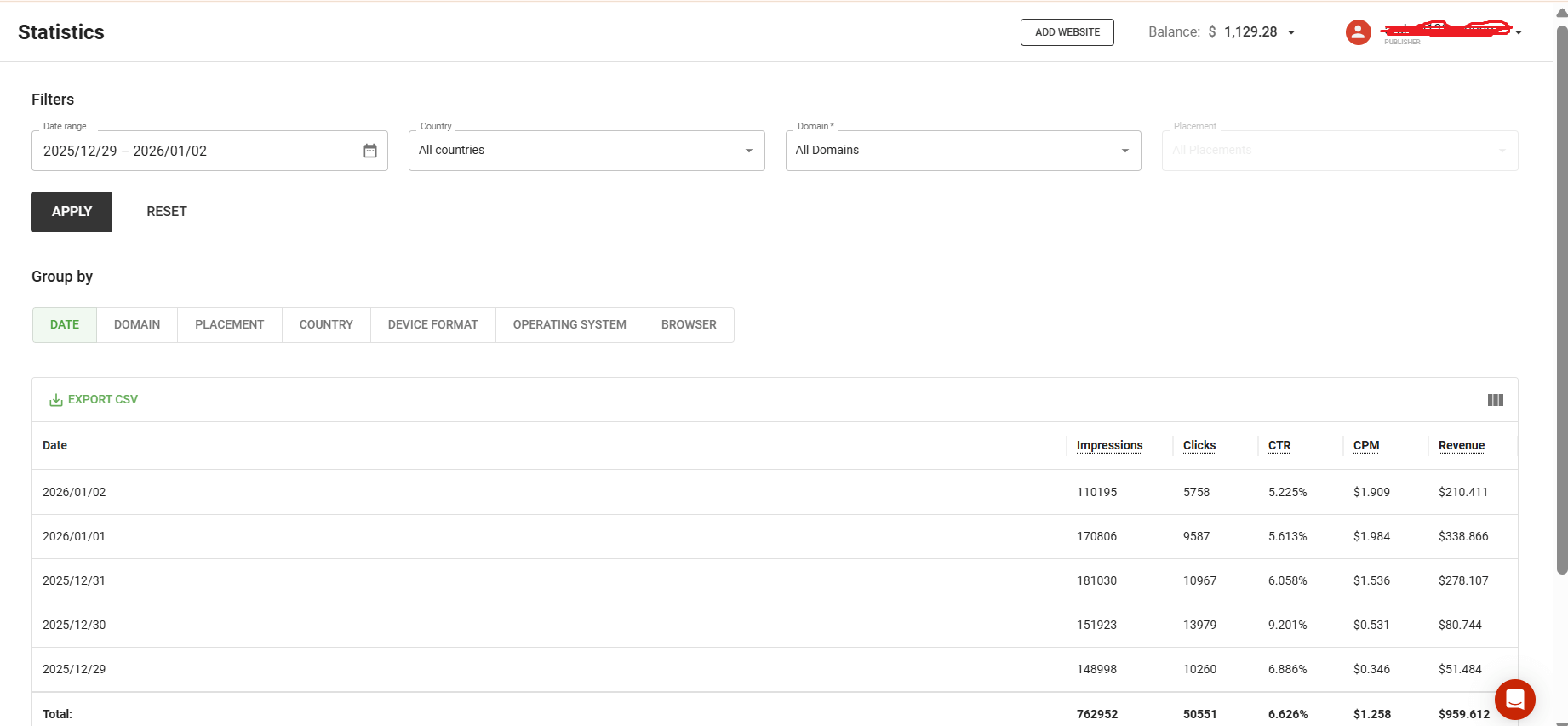
Here are the numbers that matter:
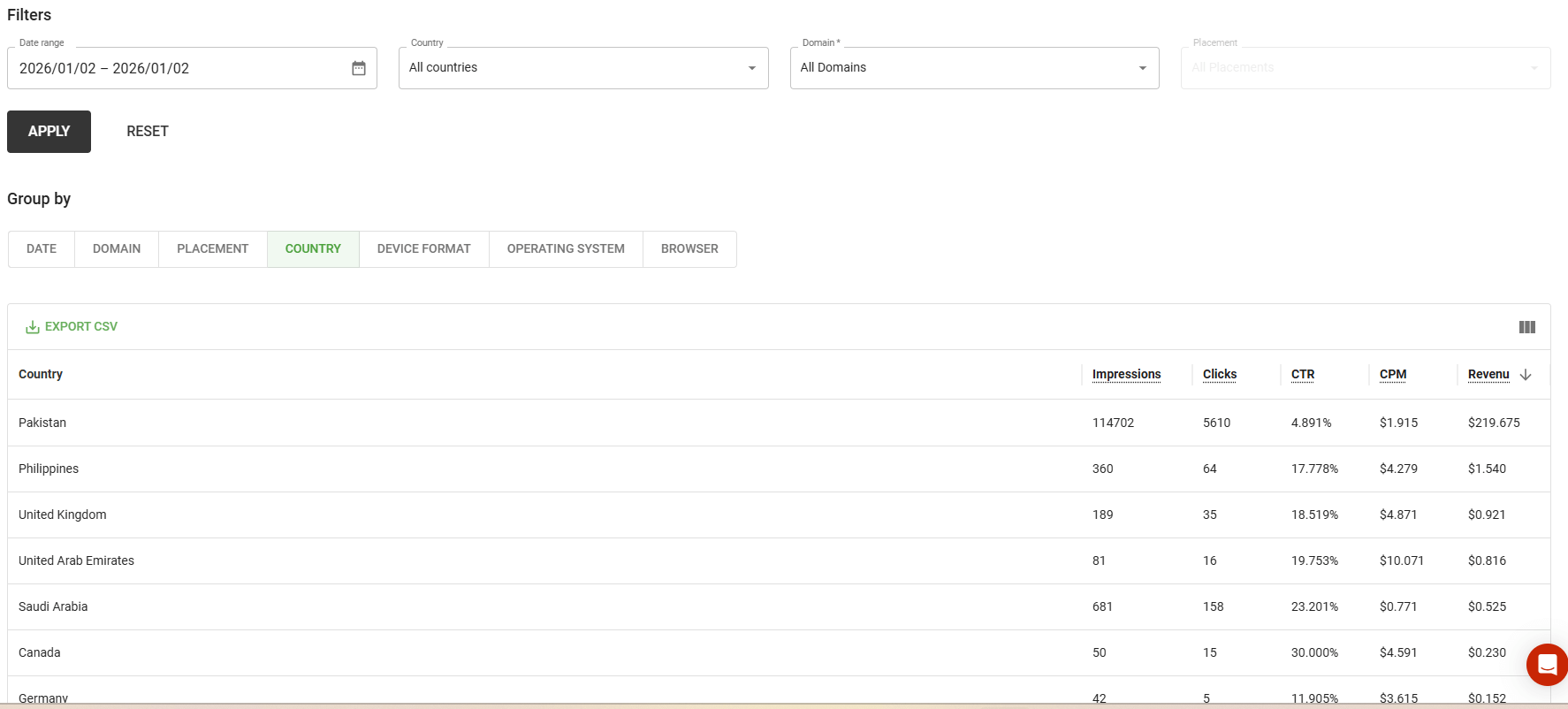
- Average CPM for Pakistan is about $1.8 to $2.0; that’s a pretty standard rate for Google Discover
- We consistently make over $1,000 weekly with Google Discover and search traffic.
Important note: to reach such results, we generate daily impressions of over 150,000. Traffic volumes still matter, but you should never forget about quality.
We strictly follow all Adsterra Terms & Conditions:
- No adult or offensive content
- No misleading headlines or fake news
- Zero copied or auto-published content
- We never use self-clicks, cloaking, or black-hat tactics
- Human-reviewed, original content only
- AI tools are used only as assistants, never for blind publishing.
Questions we get asked about Google Discover monetization
How long does it take to get news featured on Google Discover?
Google evaluates a news article within minutes to a few hours. If approved, Discover traffic peaks within 24–72 hours. A news piece usually needs 1–3 days in Discover to generate enough impressions for meaningful monetization.
Do you need a high domain rating (DR) to succeed in Google Discover?
Not necessarily — we’ve seen Discover success on lower-DR sites when the content is fresh and engaging.
What kills your visibility on Google Discover the fastest?
Misleading clickbait headlines, a slow mobile page, weak imagery, and re-publishing the same article without any real updates are all surefire ways to get yourself kicked out.
Is Google Discover traffic profitable
?Discover is hyper-personalized, so it sends the most engaged users to your website and often has better CPM rates. Making some $1,000 per week from ads is more than realistic. Search traffic is steadier and often more reliable—a bit of both is the best way to go if you’re a publisher.
How to prepare your site for Google Discover?
Avoid artificial link building. Focus your traffic strategy on publishing original, timely news and earning natural citations from other news sites. Maintain consistent publishing frequency and avoid spammy backlinks. Trust grows organically when content performs well in Discover.
How much can you earn from Google Discover traffic?
No limits. It all depends on how you convert the traffic obtained, the so-called monetization strategy. You can place affiliate links and earn high commissions from sales, or refer to ads (banners, push, pops) and get paid for user views, clicks, and conversions. Paid ads are the easiest entry point, allowing publishers to earn $1,000 weekly, or some $7,000 per month.
Final thoughts for publishers just starting out on Discover
Google Discover is a sensitive beast that needs careful handling. Concentrate on mobile users, ensure your content is 100% original even if rewritten, and be honest in your headlines. Only monetize when your traffic is looking solid, and don’t fully rely on AI; use it to help you make better decisions, not to do the job for you. Stick with mobile-first advertising networks that pay a lot for your traffic (mind the geo you work with).
Finally, be proactive in observing trends and inserting ad scripts; you must take the first step to complete the journey!