
Latin America is a media buyer’s best friend. A pile of underpriced traffic, fresh audiences, and verticals that still convert at margins Tier-1 affiliates can only dream about. This Latam affiliate marketing playbook covers market data, GEO breakdowns, vertical analysis, traffic sources, and hands-on tactics. Tarcio Santos and Mikhail Zhukov have shared everything you need to start running profitable Latam affiliate campaigns in 2026.

Mikhail Zhukov, Head of CPM ad Adsterra

Tarcio Santos, Marketing Manager at Adsterra
Why advertise in LATAM
The short answer: the numbers still favor you. While European and North American markets can make your budgets cry (and dry), LATAM sits at an intersection of massive population, rising mobile speeds, and top traffic sources.
Here is why media buyers should have at least one active Latin America campaign running right now:
Wide-open audiences with moderate competition
Most Tier-1 focused affiliates have not bothered to localize into Spanish or Portuguese. Big mistake! Fresh audiences that have not seen the same recycled creatives for five years respond at dramatically higher rates. Low competition? No, but LATAM markets are still underexplored with lower ad costs and a more loyal user base.
Mobile dominates
Latin America’s smartphone penetration has reached 81% and is projected to hit 93% by 2030. An affiliate who builds mobile-first funnels has a massive structural advantage in this region.
Digital ad spend is climbing fast
Digital ad spending in Latin America is set to reach $70.9 billion in 2029 (as of Research and Markets), growing at 12.3% compared to 2026. That trajectory is supported by real marketing budgets being poured in right now.
E-commerce and e-services are booming
The region’s e-commerce market is expected to surpass $494.4 billion in revenue by 2030.
Mobile purchases dominate among Latin Americans with a share of 84%. That shopping momentum unwraps rich affiliate opportunities across product verticals.
Cost efficiency
In Mexico, Facebook CPCs run between $0.01 and $0.02. Google Ads CPC averages $0.091. Compared to US or UK markets, you are working with a fraction of the cost per click.
Impulsive but smart buyer behavior
The culture in LATAM leans toward quick decisions and spontaneous purchases, especially with health, online subscriptions, and iGaming offers. However, you should not expect Latin Americans to buy blindly; they shop strategically. As Lataminterspectr claims, tariffs from the US and increased fees have made Latam buyers more selective: they use 7 or more shopping channels looking for cost efficiency.
Expanding digitalization and Internet speeds
Brazil has become one of the top-4 fastest mobile Internet countries. Despite Mexican cities not being able to boast such speeds (some 55.17 Mbps vs 250 Mbps in Rio de Janeiro), the region is catching up very quickly.
5G rollout is accelerating, with more than 30 operators in 13 Latin American countries having launched commercial 5G networks. By 2030, 5G is expected to account for more than 50% of all mobile connections in the region.
Faster connections mean richer ad formats like video and interactive media, which work significantly better here now.
NOTE: In LATAM, affiliates rely heavily on video content rather than traditional blogging. Creators and influencers increasingly use TikTok, Instagram, YouTube, and social commerce channels like TikTok Shop and WhatsApp to drive discovery and conversions. A web replacement to such ads is a Social Bar ad unit heavily optimized for mobile screens and fast loading.
Core LATAM market transformations — What 2027 will reveal
The LATAM affiliate marketing landscape in 2026–2027 looks very different from what guides written two years ago described. The following shifts come from Tarcio Santos’ direct observations at Afiliados Brasil 2026, the region’s most important industry event. Take note — these changes affect strategy at every level.
Local advertisers and affiliates are thinking global
The conversation has moved away from local traffic optimization. The new obsessions are “earn in USD” and “sell abroad.”
Affiliates are aggressively scaling into Tier-1 countries. The main focus is on the UK, France, and Italy, with heavy testing in Australia and China. Dominant verticals? For now, Finance and Nutra are at the forefront, but they usually break through among the first.
This does not mean LATAM is being abandoned — it means the affiliate ecosystem is maturing. Operators who built their skills on LATAM traffic are now using those same skills to export to higher-payout markets. The smart move for new entrants is the opposite direction: lean into LATAM while the competition is looking elsewhere.
The great iGaming pivot
With new iGaming regulations now fully active in Brazil, a large wave of iGaming affiliates has migrated into the Financial vertical to bypass compliance complexity. This pivot is creating a two-sided opportunity:
- iGaming traffic sources have less competition from established players
- CPM traffic is still available on iGaming-friendly networks offering hyper-local targeting
- Financial offers are experiencing a surge in interest (early players will profit more).
SEO is out of this league
Organic SEO is practically absent from current affiliate marketers’ discussions. The entire ecosystem is now focused on what practitioners call “Performance Publishing”:
- AI-driven multi-language landers: affiliates are using AI to launch content in multiple languages simultaneously, targeting international monetization from day one. They use high-intent, low-volume search queries aiming to the bottom of the funnel.
- Traffic arbitrage over SEO: Instead of waiting months for Google rankings, former SEO affiliates are buying traffic and running arbitrage-style campaigns with ad networks.
Retention first
LATAM affiliate marketing is moving towards aggressive retention funnels. Once traffic is acquired, it stays inside tight monetization ecosystems using push notifications, email lists, and dedicated WhatsApp and Telegram groups for repeated monetization.
The key insight here: affiliate publishers who still rely on organic LATAM SEO as their primary channel are being left behind. Performance-first operators are running circles around them.
LATAM market overview. Key numbers and audience behavior
Let’s start with the big picture. What does the Latam market look like in real numbers? This will help you form a correct media buying strategy, shortlist affiliate offers, and choose a stack of traffic sources with decent volumes.
LATAM market outlook
- Total population 670 million+ across 18 countries
- Internet penetration 78%+ (predominantly mobile)
- Unique mobile subscribers 456 million
- Digital ad spend $50.1 billion
- E-commerce market size $160–215 billion
- Annual e-commerce growth 19.4%
- Average monthly income ~$750 (Tier-2, growing middle class)
- Primary languages: Spanish, Brazilian Portuguese (Brazil)
Payment methods by market
As Cristian Tala from DEV.TO puts it: “If you sell a digital product in Mexico, Chile, Colombia, Argentina, Brazil, and Peru simultaneously, you’re dealing with six different currencies, six tax regulations.”
Understanding local payment preferences is not optional — it determines whether your offer converts at all. If your advertiser doesn’t serve convenient payment methods, you’ll get stuck with unapproved leads and conversions.
Country top payment methods
- Brazil Pix (instant transfer), Boleto Bancário, credit card, MercadoPago (trending!)
- Mexico OXXO Pay (cash), SPEI, Clip, credit/debit card
- Colombia PSE (bank transfer), Nequi, Daviplata, Efecty
- Argentina MercadoPago, DEBIN, Cuenta DNI, credit card
- Peru Yape, Plin, PagoEfectivo, Interbank
- Chile Webpay, Khipu, Mach
Offers that do not support local payment methods lose a significant chunk of conversion volume before the funnel even starts.
GEO breakdowns: country-level marketing intelligence
Latam is not a unified market where you can onboard with generic hooks and offers. These are authentic, rich cultures and complex economies. And by learning how they differ and evolve, you can target ads and communicate your messages with
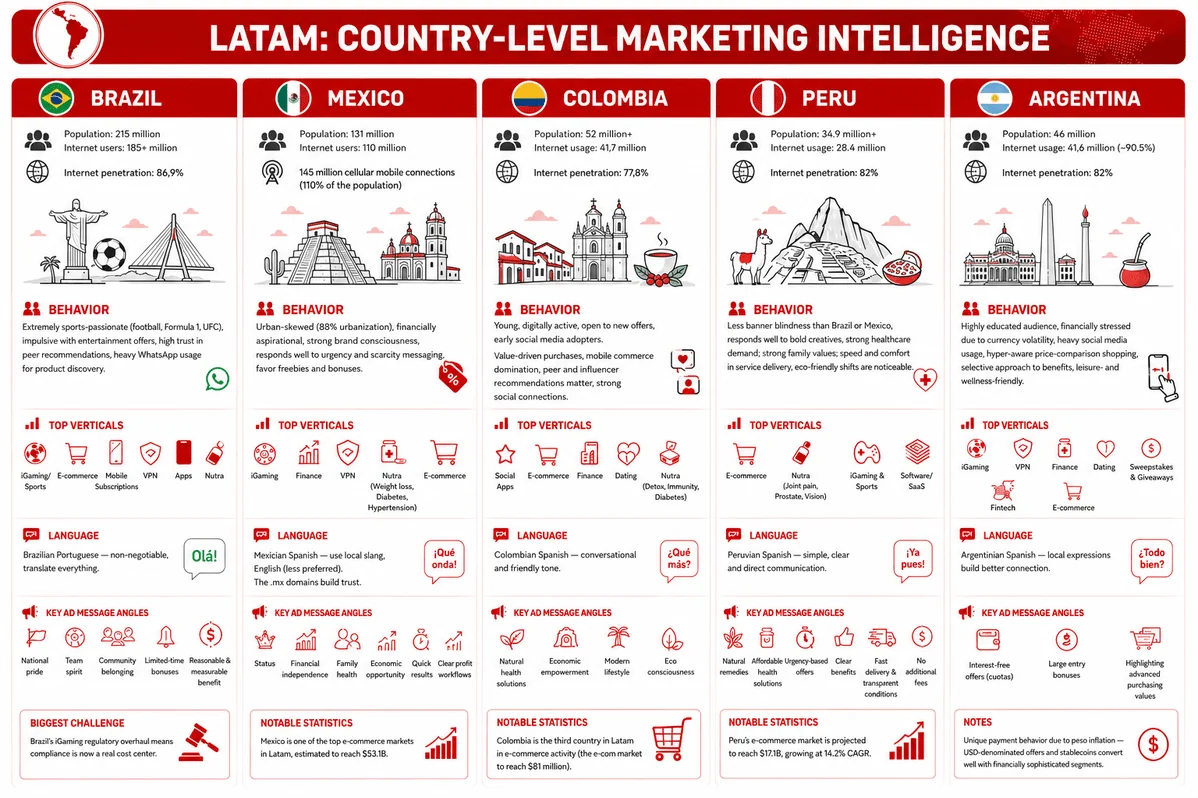
Brazil
- Population: 215 million Internet users: 185+ million
- Internet penetration: 86,9%
- Brazil accounts for close to 30% of Latin American e-commerce and has e-commerce growing at 14.3%, forecast to surpass $200 billion by 2026.
- Behavior: Extremely sports-passionate (football, Formula 1, UFC), impulsive with entertainment offers, high trust in peer recommendations, heavy WhatsApp usage for product discovery
- Top verticals: iGaming/Sports, E-commerce, Mobile Subscriptions, VPN, Apps, Nutra
- Language: Brazilian Portuguese — non-negotiable, translate everything
- Key ad message angles: National pride, team spirit, community belonging, limited-time bonuses, health urgency, reasonable & measurable benefit
- Biggest challenge: Brazil’s iGaming regulatory overhaul means compliance is now a real cost center
Mexico
- Population: 131 million; Internet users: 110 million
- 145 million cellular mobile connections at the end of 2025 (110% of the population)
- Behavior: Urban-skewed (88% urbanization), financially aspirational, strong brand consciousness, responds well to urgency and scarcity messaging, favors freebies and bonuses
- Top verticals: iGaming, Finance, VPN, Nutra (weight loss, diabetes, hypertension), E-commerce
- Language: Mexican Spanish — use local slang, English (less preferred)
- The .mx domains build trust
- Key ad message angles: status, financial independence, family health, economic opportunity, quick results, clear profit workflows, consumer benefits
Colombia
- Population: 52 million+
- Internet usage: 41,7 million; 77,8% internet penetration
- Customer profile: young, digitally active, open to new offers, early social media adopters
- Behavior: value-driven purchases, mobile commerce domination, peer and influencer recommendations matter, strong social connections.
- Top verticals: Social Apps, E-commerce, Finance, Dating, Nutra (detox, immunity, diabetes)
- Key ad message angles: Natural health solutions, economic empowerment, modern lifestyle, eco consciousness.
- Notable statistics: Colombia is the third country in Latam in e-commerce activity (the e-com market to reach $81 million by 2027)
Peru
- Population: 34.9 million+
- Internet usage: 28.4 million (82% internet penetration)
- Behavior: Less banner blindness than Brazil or Mexico, responds well to bold creatives, strong healthcare demand; strong family values; speed and comfort in service delivery, eco-friendly shifts are noticeable.
- Top affiliate verticals: E-commerce, Nutra (joint pain, prostate, vision), iGaming and Sports, Software/SaaS.
- Key ad message angles: Natural remedies, affordable health solutions, urgency-based offers, clear benefits, deposit bonuses, fast delivery and transparent conditions, no additional fees.
Argentina
- Population: 46 million
- Internet usage: 41,6 million (~90.5%)
- Behavior: Highly educated audience, financially stressed due to currency volatility, heavy social media usage, hyper-aware price-comparison shopping, selective approach to benefits, leisure- and wellness-friendly
- Top verticals: iGaming, VPN, Finance, Dating, Sweepstakes and Giveaways, Fintech, E-commerce
- Notes: Unique payment behavior due to peso inflation — USD-denominated offers, and stablecoins convert well with financially sophisticated segments
- Ad message focus: interest-free offers (cuotas), large entry bonuses, highlighting advanced purchasing values.
Top LATAM affiliate verticals for 2026
Top affiliate marketing verticals in LATAM stay unchanged, with a growing share of apps and digital subscriptions offers. But there are specifics in how they’re advertised. Let’s zero in on the major shifts for 2026–2027.
iGaming vertical in LATAM affiliate marketing
iGaming in LATAM in 2026 is a tale of two realities: massive revenue potential alongside complex regulatory environments.
The Brazil iGaming landscape
Starting January 1, 2025, online gaming are regulated under Brazil’s federal law. Operators must hold a valid license from the Ministry of Finance to operate legally. Affiliates do not require a separate license under Brazil’s iGaming regulation, but their activities are strictly regulated through the operators they promote.
Brazil’s Ministry of Finance has placed sports advertising at the top of its 2026/2027 regulatory agenda, with a first-quarter 2026 review of existing regulations covering affiliate and digital influencer advertising specifically.
Brazilian regulators have banned sports wagering ads during live sporting broadcasts, and the use of celebrities, influencers, and athletes in marketing material is also being restricted.
As of 2026, Brazil counts 78 licensed sports game operators running 138 brands, with the market continuing to develop its regulatory framework. According to Regulus Partners, the region has a high chance of becoming the fifth-largest iGaming market in the world.
Other LATAM GEOs for iGaming:
- Mexico: Legal and growing, less regulatory heat than Brazil, strong sports betting culture
- Colombia: Regulated since 2016, one of the most mature licensed markets in the region — good for compliant operators
- Argentina: Province-by-province rules, complex but workable with location targeting
- Peru: Growing licensed market — watch for further regulatory news in late 2026
iGaming ad creatives for LATAM markets
iGaming creatives, including prelanders, should immerse your audience in fascinating experiences. If you’re a sports fan, use your knowledge to promote a UFC fight or a soccer match. Encourage users to support their fav teams or make them feel they’re missing out on a great opportunity to hit the jackpot.
Dynamic elements like fortune wheels or counters will engage users to try their luck. With In-Page Push, you can go for several trending templates with animation.
If your advertiser offers an entry bonus, use it as an impetus in your ad creatives. But ensure your message is fully compliant with current iGaming laws. For example, the National Consumer Secretariat of Brazil (SENACON) has prohibited all sorts of incentives like signup bumps or bonuses in ad offers.
Use national flag colors when advertising sports events in Brazil. Brazilians are very proud of their national heroes and teams, which is absolutely justified.

The compliance and targeting checklist for iGaming affiliates in LATAM:
- Promote only licensed operators (check the federal registry)
- Include “18+” (or other relevant age) and “Responsible Gaming” messaging in all creatives
- Display Terms and Conditions clearly
- No celebrity or current athlete imagery
- No promotion to minors
- Avoid false or unproven guarantees
- Verify your ad message compliance with local regulations: incentives, bonuses, engagement hooks, promises, tone of voice, etc.
- Use non-mainstream ad networks instead of Google and Meta.
- Offers to try first: Betsson, Betcris, Caliente, Wplay, Americas Cardroom
- Ad formats: Popunder and Social Bar
- Devices: Desktop, Mobile, Tablet
- Flow: CPM for deposits, CPA for app installs.
Social apps, VPN, and utility
Over 70% of internet users in LATAM are on mobile, making it ideal for mobile-optimized offers. This is a highly accessible vertical for newcomers and scales reliably with popunder and push traffic. Android dominates the OS landscape across all major LATAM GEOs — iOS targeting is secondary.
Best-performing offer types:
- Messaging and social video apps
- Android antiviruses and phone security apps
- Memory cleaners and device optimizers
- Download managers and multimedia players
Examples of offers: BigoLive, Video download Player, VotTak, and All in One Downloader, Ult Player. Add here all types of Android antiviruses and Phone defenders. Top VPN offers’ examples for LATAM: McAfee+ Premium (MX exclusive), McAfee Total Protection (BR exclusive), XY VPN, Jay VPN, Sure VPN, Privad VPN.
App and utility ad creatives for LATAM
When promoting VPN, utility, or app offers across LATAM countries, choose low-cost Popunder or In-Page push networks. Make super-fast landing pages and always put device-specific values. Let’s list the main strategies:
- Mobile targeting setup: prefer Android OS. Over 80% of the utility audience in LATAM uses Android devices.
- Master high-converting hooks: appeal to real pain points like “Battery draining too fast?”, “Clear 5.2 GB to make your phone faster,” Unencrypted connection can put your data at risk.”
- Never use aggressive messages like “Your data is at risk!” or “Virus alert!”
- Optimize lander visuals for high load speed on mobiles.
- Use animated or interactive elements.
- Craft clear CTAs like “Baixar Grátis”
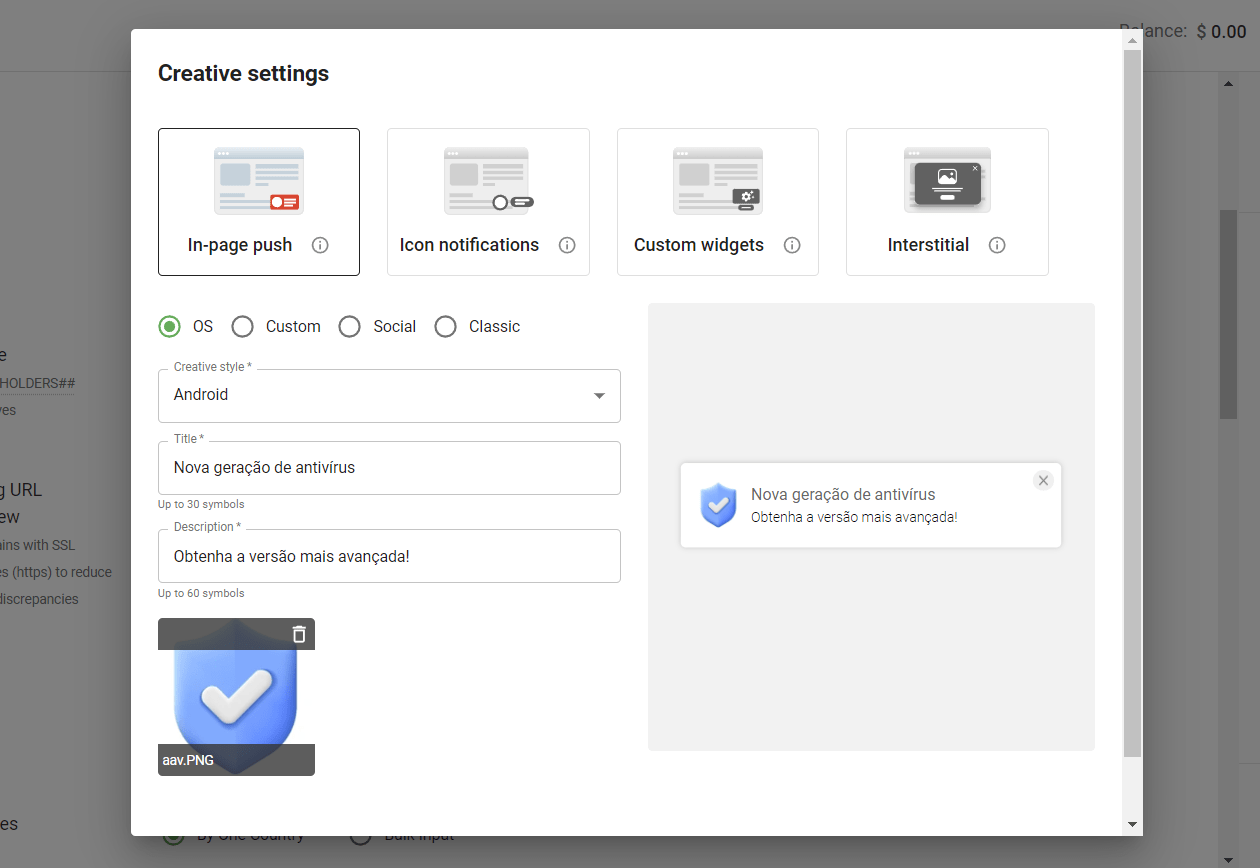
The example Antivirus creative is adapted to Android devices. It’s neat, clear in message, and looks totally in-device.
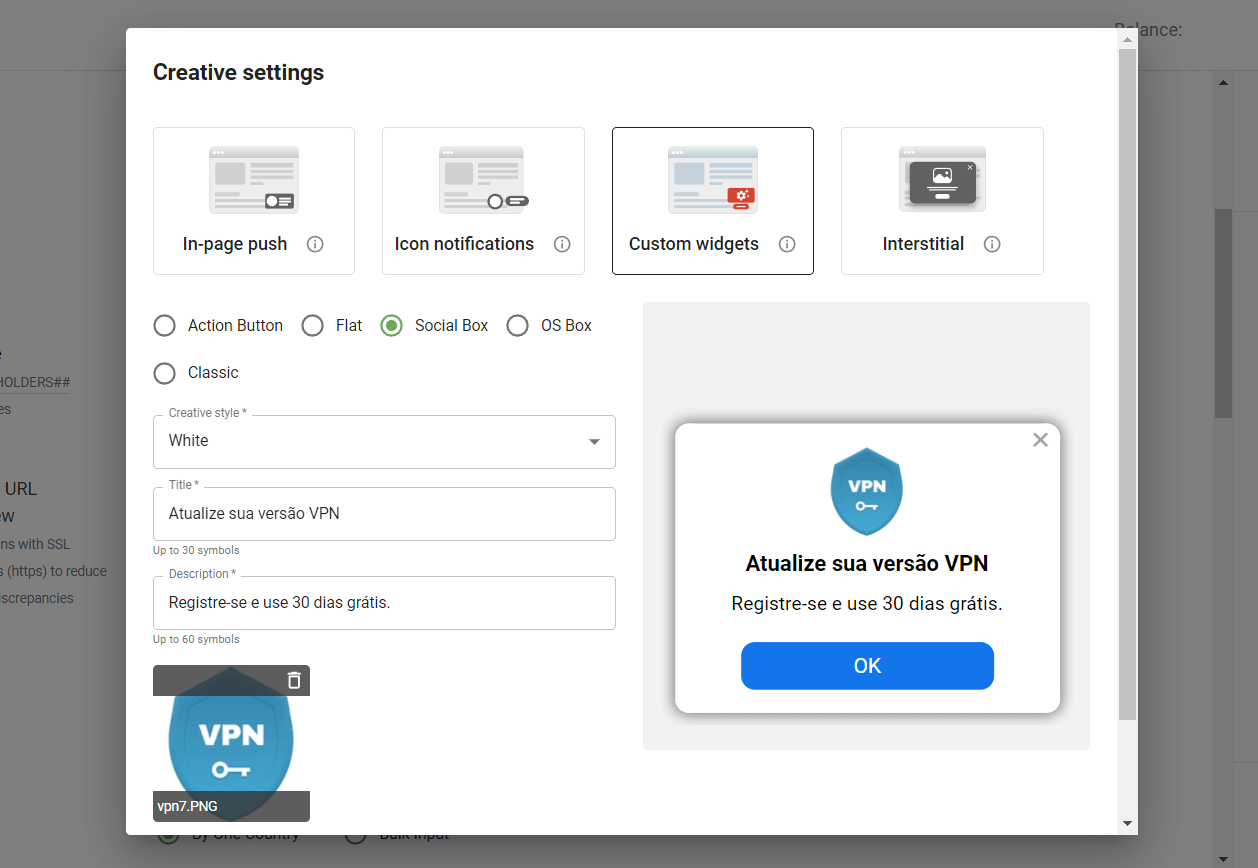
VPN creatives are even more sensitive to OS. Prefer credible, clean designs and appealing “free usage period” or “50% discounts for annual subscription.”
Basic targeting checklist for utility campaign launch
- Top Latam countries for the Utility vertical: Brazil, Mexico, Colombia, Argentina, Peru
- Devices: Mobiles, Android dominates
- Ad formats: In-Page Push, Popunder, Social Bar
- Traffic type: any traffic, including explicit and niche
- Best flow: CPI (cost per install) and free trial signups. Keep the funnel short — the fewer steps between the ad and the conversion, the better.
- With Adsterra, you should start with Popunder ads at CPA pricing. This will ensure faster conversions and profits. An alternative ad format is Social Bar or In-Page Push; these ads are famous for superb CTRs
E-commerce and social commerce
E-commerce affiliate marketing campaigns in LATAM work best when centered around platforms already trusted by local shoppers:
- Mercado Libre (the regional dominant),
- Amazon (Brazil and Mexico),
- Americanas (Brazil),
- Falabella (Chile, Colombia, Peru),
- and Rappi (Colombia, Mexico, Brazil).
Deal aggregation, couponing, and cashback websites are also popular e-commerce affiliate models across LATAM marketplaces.
The hard part: purchase conversions require CPM-based traffic buying, and returns and delivery delays are common regional logistics challenges, especially for purchase-led campaigns. CPA pricing for hard-flow e-commerce (actual purchases) eats margins fast. The exception is shopping app installs — those flow well on CPA. Start with CPM traffic, optimize toward conversion clusters by placement and device, then tighten. Creators can improve trust by giving followers clear final-price information before checkout.
E-commerce verticals converting in 2026: Fast fashion, consumer electronics accessories, beauty and personal care, fitness equipment, and home goods.
Ad creatives for E-commerce affiliate offers in LATAM
Latin America demonstrates a high level of community belonging. People rely on recommendations, trend-watch, and share experiences. Advertising creatives should demonstrate a balance of good trade-off, credibility, and positive emotions.
- Use dramatic hooks or appeal to curiosity, like “Don’t buy until you see this…”
- Show the real product unboxing if using video formats.
- Add urgency triggers like “only 24 hours”
- Mention “free shipping” or “delivery guarantee,” “no hidden fees” benefits if provided.
- Use contrast colors and clear CTAs like “buy today,” “get your discount,” “get your coupon.”

Basic targeting checklist for E-commerce offers:
- Top Latam GEOs for E-commerce ads: Brazil, Argentina, Mexico, Peru, Colombia
- Examples of offers: AliExpress, Alibaba, Mercado Libre, Americanas
- Ad formats: Popunder, Social Bar, Interstitials
- Devices: desktop, mobile, tablet
- Traffic type: mainstream
- Flow: CPM for hard-flow conversions, CPA for app installs, trials, and free subscriptions
Digital subscriptions and AI tools
Latin America is fond of subscriptions. The best countries to promote these offers are Brazil, Mexico, Colombia, and Chile. The reasons are fast-developing digital infrastructure, early software adoption thanks to tech-savviness, and payment methods availability.
Mexico has an extensive workforce increasingly relying on freelancing work. This powers a massive demand for digital tools.
Managers and tech enthusiasts in Colombia display optimism toward using AI at work and in daily routines. They also adopt online subscriptions to commercial services widely.
Chilean consumers demonstrate strong purchasing power and willingly use recurring credit card billing. They are also among the first to buy premium plans and licenses.
Examples of offers to promote:
- Brazil: wellness apps, AI-driven productivity software, B2B SaaS for small business owners, language learning apps, and streaming/entertainment bundles.
- Mexico: premium design apps, AI content writing assistants, VPNs, online university or skill-building certifications, and freelance platforms.
- Crucial tip for Mexico: Target major city hubs like Mexico City, Monterrey, and Guadalajara, where the concentration of tech-savvy pros is highest.
- Colombia: productivity and AI automation suites, background removal tools, and digital wallet sub services.
- Chile: business management tools, cloud storage subscriptions, and creative AI applications.
PIN Submits / Carrier Billing
The Carrier Billing subvertical differs by user behavior and top geos. People love helpful services like horoscopes or wellness/mindfulness apps. They willingly subscribe to such offers, especially if the monthly fee is minimal. The specifics of PIN Submits comes with their nature — they’re based on a mobile carrier’s technology.
- Top geos for mobile subscriptions: Argentina, Brazil, Mexico, Peru, Uruguay.
- Offers examples: streaming, games, iGaming, wellness, social apps.
- Mobile carriers: (AR – Movistar, BR – TiM, CO – Claro, PE – Entel, UY – Movistar, MX – Telcel)
- Ad formats: Popunders, In-Page Push
- Devices: mobiles (3G/4G connection targeting)
- Traffic type: mainstream + non-mainstream
- Flow: CPM, CPA (1-2 click)
Ad creatives for the Subscriptions and PIN Submit verticals
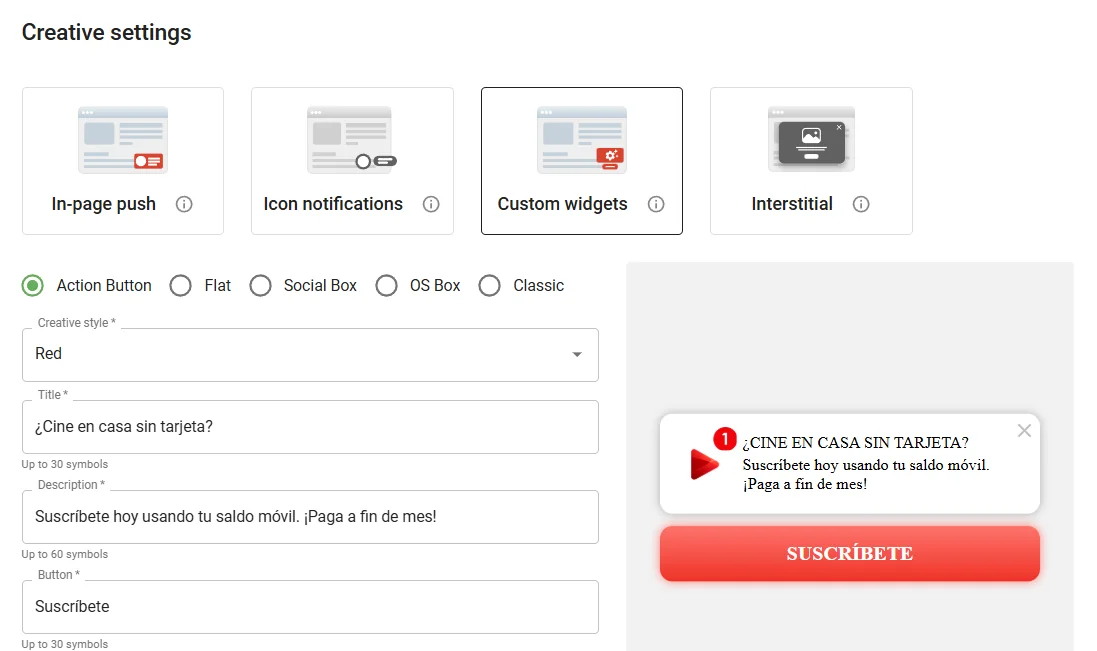
Designs must clearly define urgency and value. The OS-nativity is not obligatory here, but a contrasting and engaging message. Here are the top-performing ad angles:
- The “unlock now” message (Streaming/Software): “Watch premium sports without a credit card. Pay with your mobile phone.”
- Usage of “secret tricks” (Games/Apps): “Unlock 10,000 coins instantly. Add it to your monthly mobile plan.”
- The “special offer” angle: Use localized words like Ofertón, Promoción Exclusiva, or Oferta Relâmpago to trigger FOMO (Fear of Missing Out).
Top traffic sources and traffic quality for affiliates in LATAM
In 2026–2027, Latin America still leaves much room for affiliate marketing, with relatively affordable traffic and growing audiences. Here is how each major traffic type performs in the region.
Popunder traffic
Popunder (on-click) is the powerhouse of LATAM affiliate marketing. It delivers massive volumes at CPM prices that make testing affordable. Pop ads perform well across virtually every vertical: iGaming, VPN, E-commerce, Dating, and Mobile Subscriptions.
Why it works in LATAM:
- Android device domination; no obvious pop ad blocks like with iOS.
- People are still tolerant of wide-screen, full-page advertisements if they deliver value.
- Publishers from LATAM prefer this format over others.
Best practice: Use a prelander to warm the user before the main offer page. CPM pricing is the right call for offers with hard conversions (purchases, deposits). CPA popunder works for install or registration flows. Use shorter lead forms to reduce bounce rates and ensure you secure user data.
Push traffic
Push notifications deliver personal-feeling messages directly to user devices or browsers. In the mobile-first LATAM region, push traffic drives strong CTRs and further conversions.
Two formats dominate:
Classic Web Push: Subscribers who opted in receive ads. The format works for iGaming, Finance, VPN, Nutra. The audience is slightly older on average.
In-Page Push: Ad displays as a browser notification-style widget on the webpage. Reaches all devices including iOS, requires no subscription. CTRs are often higher than classic push for mobile-heavy GEOs.
Testing guidance: Run 10–15 creatives minimum per campaign. Test icon, headline, and description variations systematically. Language matters enormously — a poorly translated push notification kills CTR regardless of the offer quality.

Display ads
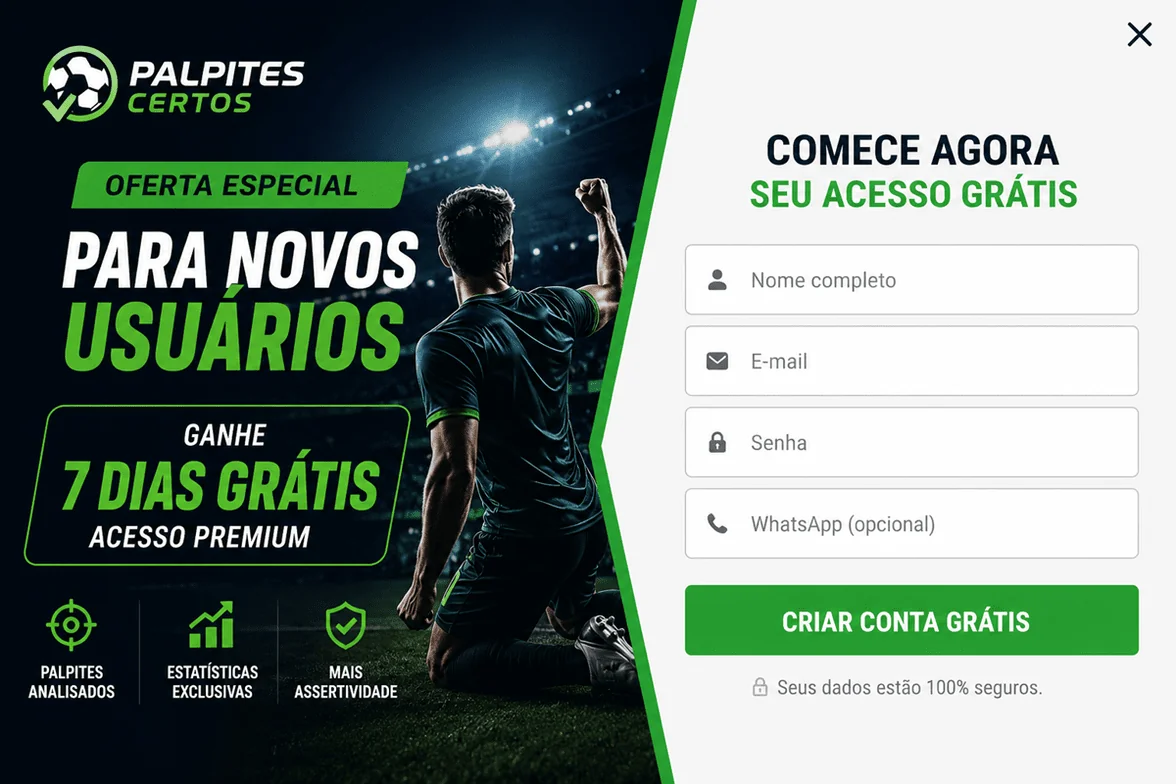
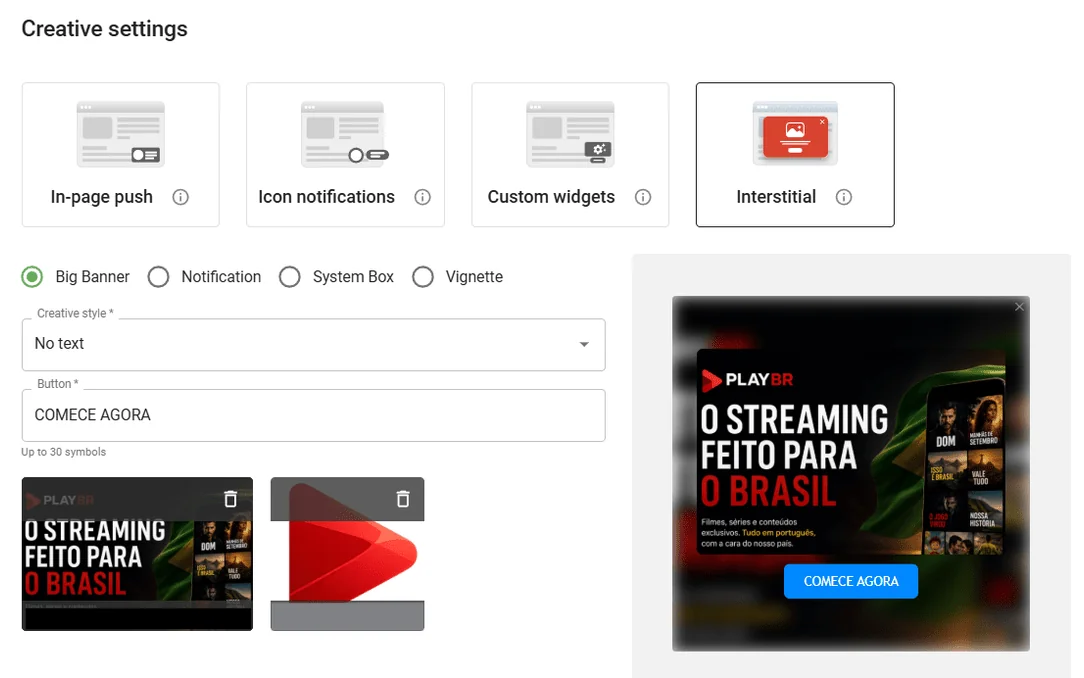
Publishers across Latin America widely use classic banners and innovative Social Bar & interstitials. While banner advertising supports long-running brand outreach campaigns, creative formats like interstitials deliver richer experiences and drive higher engagement.
Social Traffic (Facebook, Instagram, TikTok)
Facebook and Instagram remain the kings for Nutra, E-commerce, and Finance in LATAM. But refined targeting and broad reach often come with account ban risks, especially in Finance and iGaming advertising. Compliance and tests are essential.
TikTok is exploding in popularity, especially for gaming and younger audiences. For iGaming affiliates who can navigate platform policies, TikTok in LATAM offers exceptional reach.
Instagram, WhatsApp, and Telegram have gone beyond being just apps in LATAM and are now dominating in product discovery and repeat conversions. They are e-commerce channels brands use to share special offers, customer reviews, and unpacking videos. WhatsApp Business is used for abandoned cart recovery, customer service, and product launches.
Affiliates build retention funnels that increasingly route traffic into WhatsApp groups for repeated monetization.
Native advertising
Native ads still perform strongly for Wellness, Nutra, Finance, and E-commerce — verticals where the user needs some feeling of trust before converting. Native formats work best when conversion is required more than clicks.
When to use native in LATAM:
- Offers that need a story-based funnel (before/after, testimonial, news-style prelander)
- Products and services where trust is the primary conversion barrier (Financial sector)
- Promotions tied to news-style editorial content.
Main LATAM affiliate marketing tips for 2026–2027
These tips below reflect the current state of the market based on campaign data, industry conference intelligence, and ongoing tests we run.
One country per campaign
The same offer might perform well in Brazil, underperform in Mexico, and fail completely in Chile. Why? Simply because of cultural differences that affect how audiences interpret creatives.
Never mix LATAM GEOs into a single campaign. The traffic performance, bid floors, conversion rates, and creatives’ CTRs differ enough. Combining all these leads to unreliable data and wasted budget.
Respect regional preferences
Avoid treating any big country like “one target area.” Large and culture-rich territories like Brazil differ by user shopping patterns and cultural preferences in southern and northern regions. For instance, southern Brazil is traditionally more open to global brands and expensive offers, while northern regions lean towards authentic local players. In this case, affiliates and media buyers can benefit from an additional targeting level by state → city.
Translate properly
Generic Google Translate creatives are recognizable and less credible. Brazilian Portuguese and Mexican Spanish are authentic languages, containing idioms, expressions, and emotional triggers that generic translations miss. Hire native speakers to review ad copy and landing page text. The ROI on proper localization is measurable.
Note: a well-built and tested AI prompt is the least evil if you can’t hire a pro speaker for translation.
Android first, then desktop, and thirdly, iOS
Across all LATAM GEOs, Android holds the dominant OS share. Build creatives and landing pages for Android screens first. If your offer is iOS-only (20–22% users across the region), check that your traffic source supports iOS-specific targeting and expect lower volumes.
Use CPM for hard-flow offers
Offers with payouts tied to purchases, deposits, or credit card billing need CPM-based buying. Expensive CPA pricing for complex conversion flows in LATAM often results in quick budget waste and low data for further optimization. Start CPM, find converting placements, build whitelists/allowlists, then start campaigns with selected sources only.
Pro tip: if you need a faster way to optimize CPM/CPC traffic for conversions, try auto-optimization tools like CPA Goal. It allows you to set rules for placement unlinking when they hit the spending limit without serving expected results.
Prelanders are not optional for Popunders
A direct link to your offer can generate poor-quality conversions. Users need a bridge, or a prelander that builds urgency and qualifies the intent. Prelanders with countdown timers, social proof elements, extra bonuses, and localized visuals outperform bare offer pages.
Match creative to device OS
For Utility and VPN campaigns, show Android UI on Android creatives and iOS UI on iOS creatives. Users tend to trust ads that mirror their actual device environment. A mismatched OS visual is a credibility killer.
Note: this rule is not obligatory for carrier billing offers.
Run longer tests with Smart CPM
Slower optimization loops kill LATAM affiliate marketing campaigns. Traffic is affordable enough that CPM lets you test multiple placements, creatives, and prelanders quickly without spending into irreversible CPA commitments. Smart CPM is a way to extend your tests or campaigns with the same budget. It takes your maximum bid, and when it wins, the algorithm bids on your behalf, placing the payout needed to outcompete the second-highest bidder. You win the difference!
Watch the iGaming compliance calendar
LATAM’s regulatory agenda explicitly includes Q1 2026 reviews of affiliate advertising rules. Influencers, affiliates, content sites, marketing agencies, and online platforms are all under scrutiny for advertising unallowed content. Any iGaming campaign must promote only licensed operators and include all mandatory responsible gaming messaging.
Apps, utilities, and subscriptions are your safe zones
If iGaming compliance costs are eating your budget, or social traffic bans are disrupting campaigns, Apps and Subscriptions are the verticals that absorb those disruptions. They run on Pop and Push traffic, and provide structurally strong demand from the high-intent users.
Analyze user actions by funnel stages or importance
Even when buying large volumes of CPM traffic, you can get a 360-degree view of how placements perform. Apart from the discussed CPA Goal, you can set up multiple event tracking. It shows conversion sequences and helps select traffic sources that send the most valuable user actions.
Quick-reference affiliate campaign checklists for LATAM 2026–2027
Let’s now nail the basics of a successful LATAM affiliate marketing campaign. The checklist includes main result-supporting pillars, but there’s one more piece waiting for you in the next chapters.
- Your main traffic sources by geo: Brazil, Mexico, Colombia, Peru, Argentina, and Chile. Use Traffic Chart or another traffic pulse tool to check current volumes.
- Separate campaigns per country; avoid running bundled LATAM campaigns.
- Creative copy: it must be translated into local Portuguese or Spanish (not generic, not with Deepl, with a high-quality prompt as a minimum).
- Creative visuals: Android-matching UI for Push creatives, non-stock imagery.
- Ad format: Popunder for broad testing; In-Page Push for CTR; Native for warm-up funnels.
- Landing pages: optimization for Android mobile screens is a must.
- Payment methods on offer pages should match local preferences (Pix, OXXO, PSE, etc.)
- Check if your ad network allows ads if you’re running an iGaming campaign.
- Check if your advertiser is compliant with local regulations (for iGaming ads)
- Bid strategy: CPM for deposits/purchases; CPA for installs and registrations.
- Optimization: Build placement allowlists after 7–14 days of CPM data.
LATAM affiliate marketing: FAQs
What is affiliate marketing in Latin America?
LATAM affiliate marketing refers to running performance-based advertising campaigns targeting Latin American countries — primarily Brazil, Mexico, Colombia, Argentina, Peru, and Chile. Affiliates earn commission by driving traffic to advertiser offers (iGaming, Nutra, E-commerce, VPN, Apps, Dating) through paid or organic channels, with payouts coming from clicks or completed sales depending on the affiliate program structure. Marketplace affiliate programs such as Amazon Associates usually use fixed commission rates by category, often shown in an official rate table. Some LATAM affiliate programs can offer up to 4.5% commission on sales.
Is LATAM a good region for affiliates in 2026?
Yes, and the numbers support this claim. Digital ad spend in LATAM is $50.1 billion as of 2026, with 10.8% annual growth, while traffic costs remain well below Tier-1 markets. Fresh audiences, mobile-first behavior, and less creative fatigue give affiliates structural advantages they no longer have in saturated Western markets.
What are the best verticals for LATAM affiliate marketing?
In 2026–2027, the most stable and promising verticals are iGaming/Sports (high revenue but heavy compliance burden in Brazil), Mobile Utility/VPN/Apps (evergreen, low complexity), E-commerce (high volume, CPM-dependent), Mobile Subscriptions, and Dating (stable, year-round conversions). Financial offers are growing rapidly as the iGaming vertical becomes more complex.
What traffic sources work best in LATAM?
Popunder traffic (Adsterra, PopAds, PropellerAds, RichAds) for volume and testing; In-Page Push and Social Bar for CTR-driven campaigns; Facebook and Instagram for Nutra and E-commerce; TikTok for younger demographics and iGaming; Native ads (MGID) for warm-up funnels. UGC also works well on creator-led platforms. Video-led formats often outperform traditional blogging in LATAM, especially on social and creator-led traffic sources.
Do I need to speak Spanish or Portuguese to run LATAM campaigns?
Not personally, but your creatives, landing pages, and prelanders do. Generic machine-translated copy significantly lowers conversion rates. The minimum viable approach is developing an AI prompt with the help of a native speaker to use it for short copy translations.
Is iGaming legal in Brazil?
Brazil regulated online iGaming and sports betting from January 1, 2025, under Law No. 14,790/2023. Operators must hold a federal license. Affiliates must promote only licensed operators, include responsible gaming messaging, and comply with advertising restrictions.
What payment methods should I place on the landing page?
Brazil: Pix (essential), Boleto Bancário, credit card. Mexico: OXXO Pay, SPEI, credit card. Colombia: PSE, Nequi, Efecty. Argentina: MercadoPago. Peru: Yape, Plin. Offers without local payment method support can lose significant conversion volume.
Should I run one campaign for all of LATAM?
No. Cultural differences, language variations, bid floors, and placement performance vary significantly between countries. A Brazil campaign bundled with Mexico and Colombia produces unreliable data and diluted performance. It’s recommended to run separate campaigns per country.
What is the minimum budget to test a LATAM affiliate campaign?
Popunder CPM campaigns can be tested meaningfully with $200–$500 for initial placement data. Facebook Nutra campaigns typically need $500–$1,000 for statistically valid creative tests. iGaming on CPM pricing benefits from $700–$1,000+ test budgets to gather enough impression data across placements.
Sources of research & statistics
- https://finance.yahoo.com
- https://americasmi.com
- https://www.statista.com
- https://www.emarketer.com
- https://latamintersectpr.com
- https://www.ookla.com
- https://www.gsmaintelligence.com
- https://www.worldometers.info
- https://www.bloomberglinea.com
- https://datareportal.com/reports/digital-2026-brazil
- https://datareportal.com/reports/digital-2026-mexico
- https://datareportal.com/reports/digital-2026-colombia
- https://datareportal.com/reports/digital-2026-peru
- https://datareportal.com/reports/digital-2026-argentina
- https://paymentscmi.com/insights/colombia-e-commerce-market