Joko runs a small business focused on something most developers don’t take seriously: free apps and browser games. He owns two websites where amateur developers upload games and lightweight apps. The idea is simple: developers need to test their products, while users want to try new products. And you know what? The free app monetization flow doesn’t involve in-app methods. Profits come from Smartlinks placed across the web inventory and registration pages!
This case study breaks down how a free distribution model has generated over $50,000 per month.
Disclaimer
The story was translated by the Adsterra Content team. We had to depersonalize web screenshots and erase sensitive data to protect the publisher’s privacy. We tried to keep the copy authentic but may have misinterpreted local names or slang. Please be tolerant of this.
Before sharing numbers, I want to be real about how it started
I’m Joko, I’m from Bandung, West Java — same place I studied, wrote my first lines of code, same place where I spent two years doing freelance dev work that paid the bills but never really scaled.
Mobile games had always been my ‘metaverse’ before this word became mainstream. When a new piece appeared, I wanted to test drive it by any means possible.
The reason I started my business was frustration. I was sick of trying to find and test new apps and how chaotic that process could be. Imagine your friend sending you an APK file via Telegram. Sometimes, they would send you a link from Google Drive, but the links were out of date so quickly that you didn’t know if you were testing an up-to-date or an old app. When testing, you often didn’t even know which version of the app you were testing.
There was no simple way to:
- Upload a build
- Share it publicly
- Let people try it instantly.
- Fix the flow
That was my first insight! I can create a space where my fellow developers could upload their APKs, get subscribers, test player activity, and gain important metrics before they include paywalls and subscription plans, or any other in-app activities.
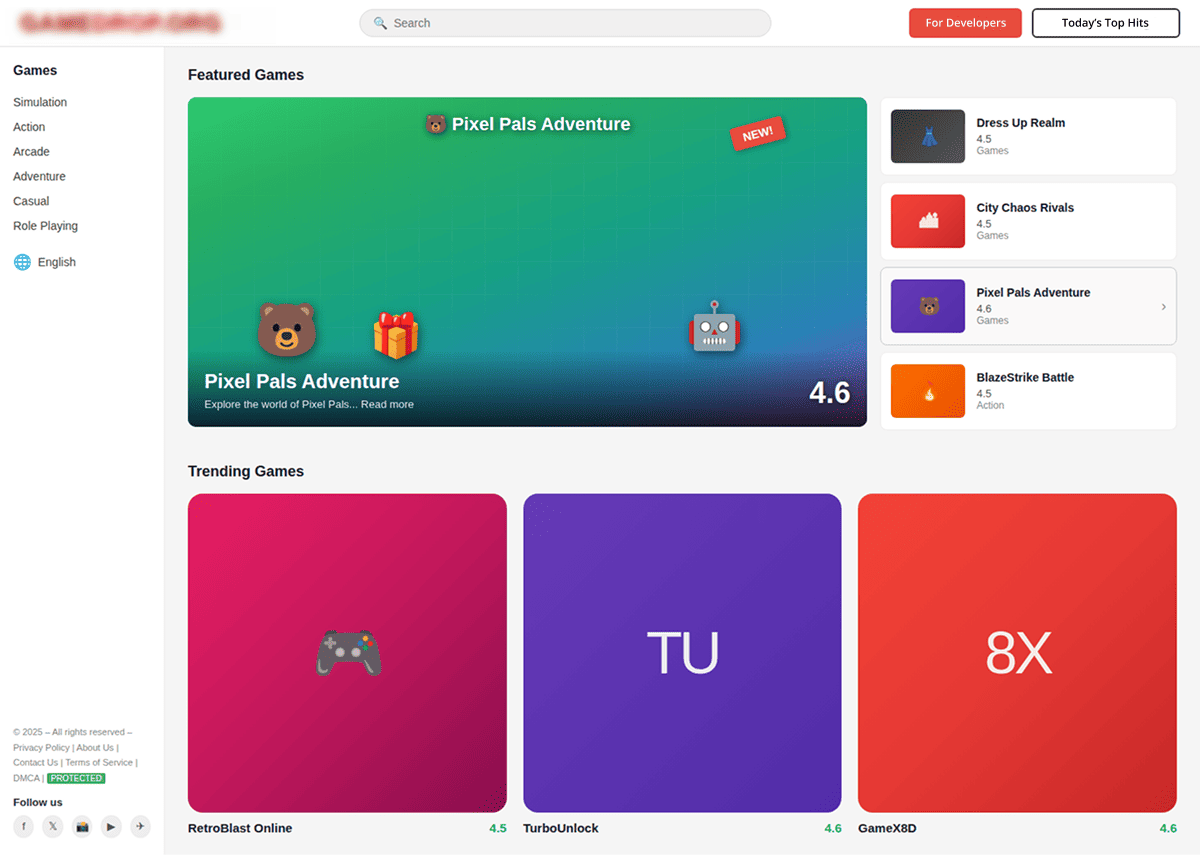
The monetization flow concept
I initially had only me and some friends uploading a few test apps. But to my surprise, there was traffic coming, especially from Indonesia, the Philippines, and a bit from India. They were not only downloading the app but were browsing the app description pages, navigating across various pages, exploring things, and randomly trying everything possible.
And then, bam! It hit me that the growing community was also an asset to be monetized. And it is doing so today on two websites, with revenues ranging from $27,000 to $52,000 every month (my highest payout in March was in the late twenties; this includes the amount to be withdrawn). This money primarily comes from the Smartlink monetization flow integrated into the user’s journey across my website.
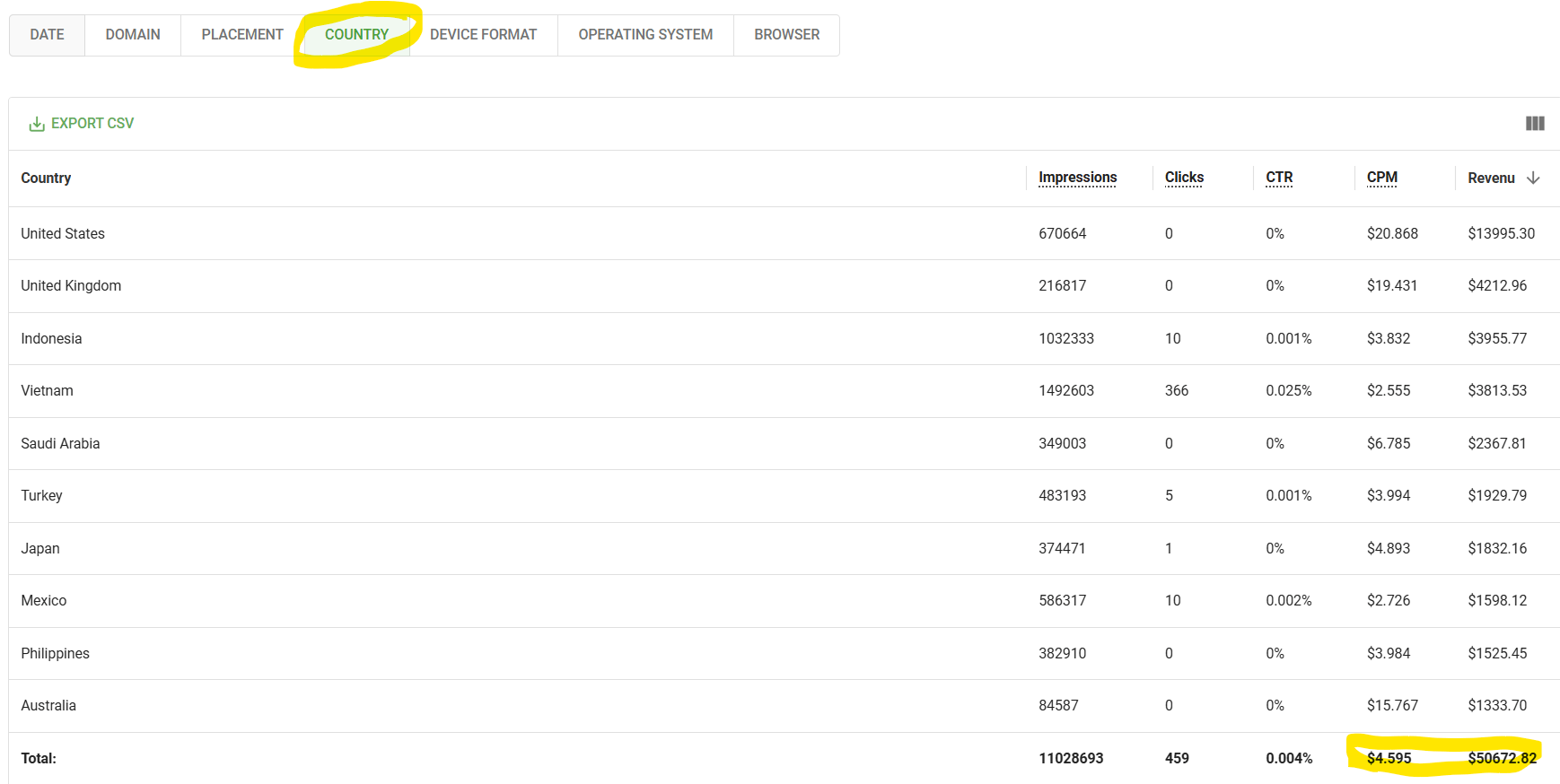
Here’s my record-month revenue taken from Adsterra. Let’s keep it realistic: 11M ad views is not my average month. But still, I made it once, and be sure I’ll explain how this flow worked!
Let me show you the insider part of my business
Before we jump to the money part, let me show how the product works because it defines the user behavior, and the behavior determines my revenue. No worries, I’m not afraid of the competition, I believe in collaborations and networking 😉
Both sites are built around the same idea: A place where developers can upload unfinished or experimental apps and let real users interact with them.
What gets uploaded
- Android APK games
- Simple browser games
- Utility apps (calculators, tools, random experiments)
Uniqueness
Everything developers and now even vibecoders upload is free and not final. The purpose of my websites is to provide early free access to nerd users willing to experience something new.
Who the users are
Another secret that affects my monetization flow: the audiences visiting my website are at 60% new users. They come to explore!
Typical user behavior looks like this:
- Open one page with the app description
- Sign up
- Try the app for several minutes
- Go back
- Click another page
- Repeat
Website session depth is high. Attention per item is quite low, but developers get precious data about HOW people interact with their products. And I get multiple ad views.
From a monetization perspective, it’s exactly what you want. New audiences are not familiar with ad placements, so they click more and visit advertising pages more willingly.
The infrastructure
This is not a heavy SaaS setup, but a custom technical stack mid-level developers can afford.
Stack
- Frontend: React with SSR/pre-rendering where needed.
- Backend: Node.js API for dynamic app data, search, and download handling.
- Hosting: Singapore VPS + Cloudflare CDN for global low-latency delivery and DDoS protection.
- Storage: Object storage for APKs, media, and static assets.
Two-site structure
No, that was not a plan. But I couldn’t decide how to spread two segments of my visitors, APK testers and game players. Tired of trying to make it all work, I separated products into 2 websites.
- Site 1: APK downloads and app detail pages.
- Site 2: Browser-playable or instant web app experiences.
It helped me with beginner SEO optimization: To avoid SEO overlap, each site needs distinct content, metadata, and an internal linking strategy.
One important note: APK distribution and third-party app hosting can carry trust and security concerns for users. Any site with such content must be careful about source transparency, file integrity, and clear descriptions.
Monetization flow: Where and how the Smartlinks live
This is the part that took the longest to get right. Honestly, I’m not good at aggressive advertising. But my friend is a marketer, and his biggest take is “when you stay open about how you monetize, people will accept ads with higher tolerance.”
I first wrote a template note for all users saying this is a non-commercial platform, and to make it free for users, I include ads in the pages’ content. No complaints since then!
But the biggest move was to decide WHERE to place Smartlinks to get clicks, not annoyance.
Location 1: Action-based clicks
Every page of both sites has similar buttons or links.
- Download APK
- Play in browser
- Try similar apps
The Smartlink is placed near these buttons under triggering headlines that make users curious. Such headlines are never named the same way as core buttons.
Location 2: Exploration loops
Each time the user does something, the platform “re-enters” the discovery section by suggesting:
- “You might also like”
- “More games”
- “Recently added”
No more simply seeing them in rows; they are a guided flow designed to make the user scroll endlessly. Smartlinks are triggered only on certain pages in this stream.
Location 3: Dead ends and fallback moments
The pages where nothing leads, and in my story, the part that feels more like a chance than a pain. The pages are:
- Broken builds
- Empty categories
- End of results
Instead of simply killing the session, Smartlinks make use of these situations. Lower intent? Undoubtedly, but at scale, it’s the kind of strategy that could earn a bit of extra revenue.
Frequency control
One of the biggest mistakes I made early on was not considering HOW many times a unique user can see a particular ad. This time, my Adsterra manager helped me. Amy optimized how often an ad can appear to a user and removed advertisers who set a high frequency. We only left the standard “1 per user per 24 hours”.
Traffic quality: Why my audience works
At first glance, my monetization flow seems weak. Low-value users looking for FREE products, no paid subscribers, and even no donut models involved. But user behavior tells a different story.
1. Constant interaction
Both my app distribution and browser games websites behave the same: people don’t come to read articles, they come to explore, click here and there. They usually open several tabs and stay longer to compare apps. Interaction is key: people consume ad links the same as they click the content pages.
2. Ad-readiness
My audience fishes out good products they know they can get for free. Users are aware that they have to pay for this, but not with money, with their time and views. This is what reduces friction when ads are shown.
3. Endless browsing loops
My business model creates natural session depth: people are always willing to open another page, check another app or game, come back for more products, check purpose-based listicles, and so on.
Countries breakdown, and why it matters
Let me share the exact data from my March dashboard. That’s my peak-earning month, so don’t take it as an average one. This is filtered by country. I’m not showing every single country, but these are the ones that actually matter from a revenue perspective.
March performance and payouts (top countries):
| Country | Impressions | CPM | Revenue |
| United States | 670,664 | $20.868 | $13,995.30 |
| United Kingdom | 216,817 | $19.431 | $4,212.96 |
| Indonesia | 1,032,333 | $3.832 | $3,955.77 |
| Vietnam | 1,492,603 | $2.555 | $3,813.53 |
| Saudi Arabia | 349,003 | $6.785 | $2,367.81 |
| Turkey | 483,193 | $3.994 | $1,929.79 |
| Japan | 374,471 | $4.893 | $1,832.16 |
| Mexico | 586,317 | $2.726 | $1,598.12 |
| Philippines | 382,910 | $3.984 | $1,525.45 |
| Australia | 84,587 | $15.767 | $1,333.70 |
| All countries | 11,028,693 | $4.595 | $50,672.82 |
The highest CPM explanation
The US CPM of $20.868 needs context, right? Nothing about the product itself screams “premium audience.” These are users browsing free apps, clicking around, trying random builds. But here’s the thing.
Advertisers don’t price based on your product. They pay based on who they think your user is and how this user interacts with their products. The US traffic means higher purchasing power, more conversions, and more advertisers who compete for this traffic.
Indonesia CPM and monetization flow
Now let’s take a look at Indonesia.
- 1,032,333 impressions
- $3.832 CPM
- $3,955 revenue
That’s over 50% more impressions than the US we discussed before. CPM is good but not the highest, and the revenue is also nice but lower compared to the US segment.
You’ve guessed already that these users make fewer conversions, and advertisers don’t compete for them as strongly.
This is basically the entire monetization flow wrapped in three sentences: Volumes come from markets like Indonesia and Vietnam. Profit comes from markets like the US and UK. You need both.
The ad network relationship
Apart from the payouts, Adsterra’s approachability is what I value most. My manager and those guys from the support dept. I connected with show commitment and have been very friendly. No false promises of getting rich overnight, timely advice, and they simply don’t work like a ticket system but like humans.
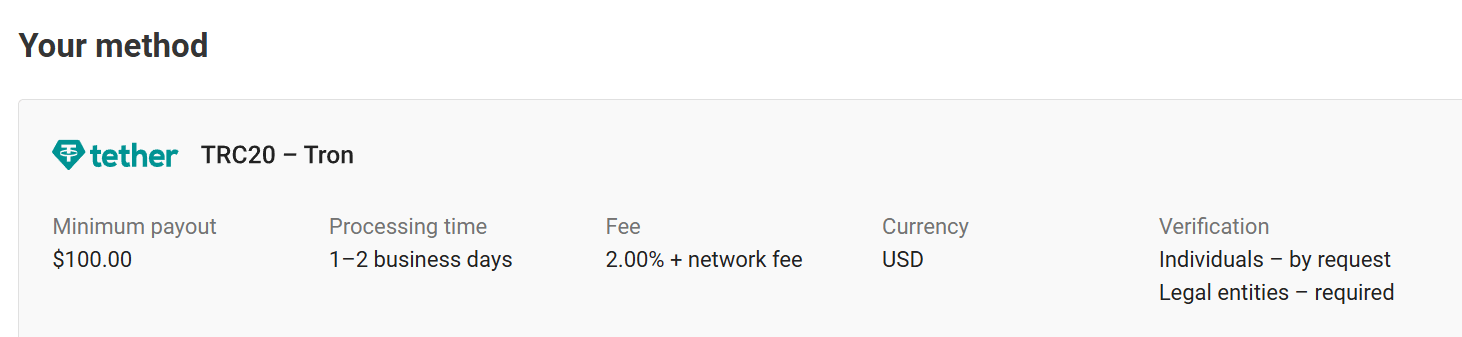
I get clear expectations about how much I made, when the payout is, what’s the fee, and the history of payouts in front of my eyes. The network provided developers like me with popular payment options.
Starter pack checklist for developers
Next, I want to share with you the decisions that turned out to be the most profitable for a free app distribution monetization. I hope these will help you build your own business online.
Building an app distribution website
| Tip | What it means |
| Design for flows, not pages | Focus on the user’s journey and movement through the app/site rather than static screens. Map out common user paths. |
| Minimize friction | Ensure smooth transitions and clear calls-to-action between steps in a flow. |
| Respect user intent | Avoid non-closable pop-ups that break the user’s key intent for testing products. |
Monetization flow & traffic strategy
| Tip | What it means |
| Prioritize free traffic scale | Initially focus on strategies to maximize organic and free traffic acquisition for wider reach, even if monetization is secondary at first. Join dev communities and invite people to upload apps and games. |
| Test free vs. paid models | Compare the performance and scale of a completely free, ad-supported model against a premium/paid one. |
| Go global early (English content) | Translate core content into English to access higher-paying CPM (Cost Per Mille) markets outside of Indonesia. |
| Localize appropriately | While expanding globally, ensure the core experience remains relevant and culturally appropriate for the Indonesian audience. |
| Aim for direct traffic and mentions | Google’s so unpredictable, but if you’re committed and solve real problems, people will spread a word about you. Forums, communities, listicles, reviews and all sorts of channels to make people know you and then DIRECTLY open your site and save to bookmarks. |
What the future holds
When I started, I only thought about how to make it easy to access newly developed products. My idea brought together amateur developers, nerd users, and tech enthusiasts. That’s the heart of the business: it gives what people really want and appreciate. And I’m sure that’s what drives direct traffic with minimum SEO efforts.
Thankfully, the monetization flow I added was also native to my audience, and I found support and timely assistance from my ad network’s manager.
Now, I’m teaming up with developers who want to start niche app marketplaces and monetize self-developed apps. This new business will alter: freemiums, paid plans, and paid ads. I feel excited but totally ready for this new start, thanks to the money I’m making with Smartlinks. I will also add full-page ads by Adsterra to my game-dedicated website, ensuring Interstitials will display before users press PLAY. So, nothing will interrupt them later.