A team of publishers from Pakistan shares tips on how to catch the right moments and make money from event blogging. Zaeem Insha and Ramzan Jani masterfully research and monetize trending seasonal content. Their next challenge was to launch and promote a blog that would feature only signature events.
 Zaeem Insha
 Ramzan Jani
News bloggers, Google Discover and SEO experts
Key takeaways before we start
- We are publishers, not event planners. We used an event blog strategy to earn $3,050.43 in one day, and $3,767+ over one week from a single campaign.
- Our formula: find a specific event with real search demand, prepare content early, focus on content utility and update fast, monetize with Adsterra.
- Event blogging can generate quick income. This guide uses real data (impressions, CTR, CPM, revenue) but is written so anyone can copy the approach for their next event.
- Event blogging relies on anticipation, timing, content writing, and search engine optimization. It has nothing to do with planning offline or virtual conferences, trade shows, or live events with attendees.
What is event blogging (our definition as publishers)
Event blogging is a content strategy centered on temporary, high-interest occurrences. You can call it niche or even micro-niche blogging when you focus on recurrent or one-time happenings and write about them so good that people come to read.
A good event for monetization is usually a scheduled happening when people already know something important will be announced or published on a specific date, and many users are likely to anticipate it and Google it.
How it works
We create ultra-focused content around a specific event or date when search traffic spikes sharply for a few days. So, event blogging is a type of SEO and content strategy built around specific events. Don’t confuse it with blogs for meeting professionals or event planners managing venues, sponsors, or attendees.
Key components of event blogging
Our world is search. Search interest for an event often behaves like low to rising to huge spike to falling. We design every post around that curve. Common event types we target: exam results days, government announcements, sports finals, Black Friday, big tech launches, and new year policy changes. The difference from seasonal content is the much shorter traffic window-days, not months.
For example, one good category is prize bond draw desults.
A prize bond draw has a known schedule, and when the draw date arrives, people start searching for things like the latest draw result, winning numbers, prize bond result, complete list of winners, or how to check their bond number.
This creates a very different type of search demand from a normal seasonal topic.
The same approach can work with other result-based events, such as:
- Board examination results
- University admission or entry-test results
- Merit lists
- Scholarship results
- Recruitment and government test results
- Public competition results
- Other officially announced results and lists.
What makes these events interesting for us is the combination of a known date + strong user intent + a short period of very high search demand.
A more typical set of events that can be used for blogging, but are highly competitive to rank for:
- Sports tournaments: IPL, FIFA World Cup, F1, Super Bowl, Cricket World Cup
- Global shopping events: Black Friday, Cyber Monday, Lazada Fashion Days, AliExpress 11.11
- Regional celebrations: Ramadan, Christmas, Diwali
- Gadget and electronics releases: iPhone and Samsung Galaxy launch, PS5 Pro release
- Holidays and special dates: Valentine’s Day, Mother’s Day, Father’s Day, Halloween
Case study overview: One-day traffic spike
We set up an event blog around a national results and schedule announcement. Successful event blogging captures a massive short-term search traffic spike, and that is exactly what happened.
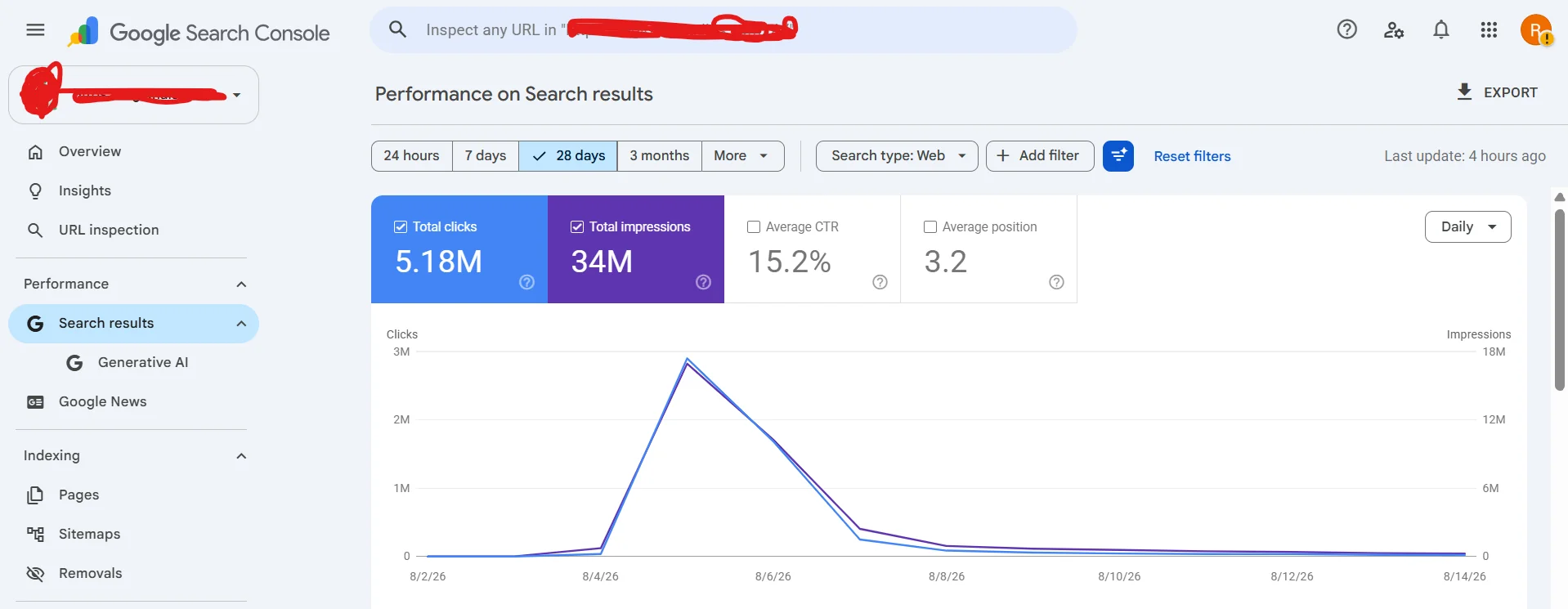
Peak day statistics and revenue:
In 7 days, we generated approximately 2.55 million impressions and $3,767.55 in revenue. We used Popunder and Social Bar formats from Adsterra because they begin earning from day one without long approval procedures.
| Metric | Result |
| Impressions | 2,180,491 |
| Clicks | 127,337 |
| CTR | 5.840% |
| CPM | $1.399 |
| Revenue | $3,050.43 |
Step 1: Finding an event with real search potential
Event blogging includes targeting specific events with solid search volume and highly motivated audiences. The most common challenges beginners face are picking events nobody will actually search for online and picking events with stiff competition among news makers.
You may be wondering what questions we use to qualify events. And you’re right, we’ve developed a simple checklist:
- Will people search this on Google?
- Is there a fixed date when demand will spike?
- Can we prepare content in advance?
- Is the topic big enough to generate tens of thousands of viewers per day?
- What’s our Personal Keyword Difficulty (it’s a Semrush metric used to evaluate if your domain is able to compete in Google.
- Is the competition high, and which domains come first in Google?
Best practices for discovering events
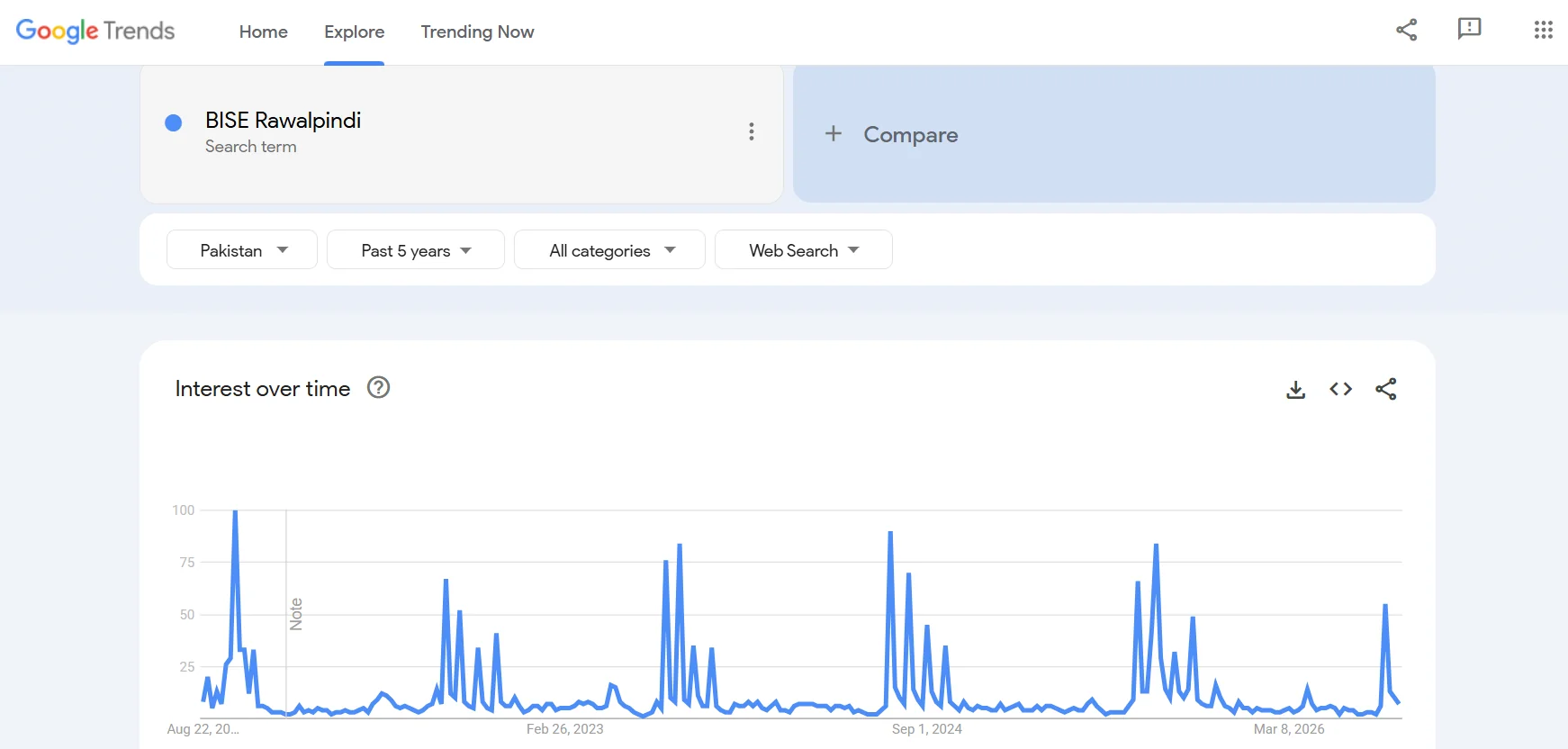
First, you need to review historical search data. We use Google Search, Google Trends, and SEMrush as our main toolset. For this campaign, we picked an event that already demonstrated high demand in 2024 and 2025. We also explored how top world event blogs structured FAQs, live updates, location filters, and frequent questions people mentioned on social media and Twitter comments.
A very simple and beginner-friendly way to focus on one type of content: go to Google Trends, ensure it picks the country you need, and set the 5-year range. Check if there is real user interest, how often they search (seasonality), and even compare two events.
Keyword strategy
For keywords, we normally look for a combination of:
- Main event keyword
- Date-related searches
- Location-related searches (the UK, Scotland, etc.)
- “How to check” searches
- “Official result” or “official information” searches
- “Latest update” searches
- Related questions users may ask (check these in Semrush).
Pro tip 1: Don’t try to target every possible keyword. Prefer keywords where you can provide a clear answer and (if possible) produce clicks and blog visits.
Check long-tail keywords
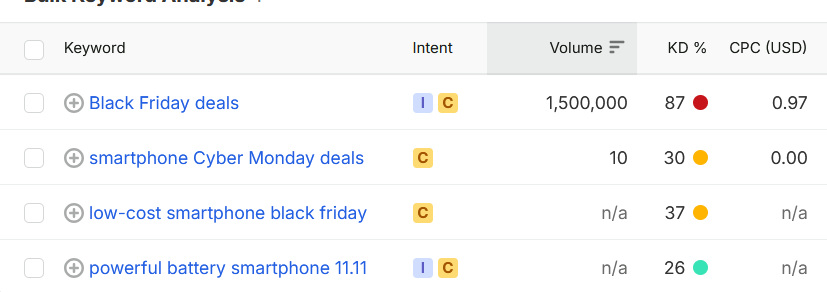
A newbie can hardly compete for popular key phrases like “BFCM 2026” and “AliExpress 11.11.” Search volumes are enormous, but organic leaders with well-established domains take the top rankings. Long-tail keywords like “smartphone Cyber Monday deals” are much easier to rank for. The good news is that long-tail keywords often include commercial intent, which means more clicks.
Step 2: Starting before the search demand spikes
One important rule you should always follow: build trust and anticipation before the event starts. That’s crucial for successful event blogging. Event blogging requires intense work during event build-up, and timing matters more than any tool.
When to set up your first publications? Creators publish content weeks or months before an event to index pages with search engines. And here comes the next rule: publish the main page at least 15–20 days before the expected peak.
We published one master guide 2 weeks before the interest started rising, answering the most frequent questions (date, time, schedule, official links), then planned supporting articles for related queries. Starting early let us fix Core Web Vitals issues and ensure the site was ready for hundreds of thousands of mobile visitors.
Starter event blogger’s pack
We prepared a lightweight WordPress website with fast hosting, SSL, and mobile-friendly design. There are no special requirements for a blogging platform or hosting. The very basic set is enough, and the good news is that you can find this checklist everywhere.
Step 3: Focusing on content value and targeting user intent
You already know that high-quality, SEO-optimized content is essential for event blogging. Don’t write long stories; design pages so every site visitor can find the exact answer in seconds. Attendees expect personalized experiences from promotional emails to post-event interactions, and readers of event blogs expect the same immediate value.
Here’s the publication backbone we use:
- Place a summary box above the fold: date, time, result, official link.
- Use clear headings: “Result Date and Time,” “How to Check,” “FAQ.”
- Keep paragraphs short, use bullet lists, avoid heavy images.
- Personalization is crucial for event success in 2026: we tailor details to the user’s most likely intent.
Because most traffic is mobile, this utility-first plan makes sense for both users and search engines.
Step 4: Always invest time in supporting content
One main article is not enough to earn search engines’ trust and drive user visits. We build content clusters: one main article followed by a few targeted supporting posts. Using SEMrush and Google’s “People also ask,” we map related searches-location-specific queries, date-specific queries, and variations like “live updates” or “how to download PDF.”
Each supporting page has a very concrete purpose. Every supporting article links back to the main page with natural anchor text. We avoid duplicate content and keep the site simple enough for beginners to manage during the hectic event window.
Step 5: Optimizing for organic search, Google Discover, and mobiles
Event blogging challenges like discoverability and click rate can be solved with an SEO Plan. No magic or secrets here; just routine you should never ignore. We include the main keyword in the title, H1, and introduction, then use related terms naturally. To gain traffic from Google Discover, we craft headlines that combine clarity and curiosity without clickbait. The featured image is a simple, readable illustration or screenshot. We never use stock photos unless they clearly illustrate the gist.
It’s not enough to open DevTools and check how the page looks on mobile screens. We constantly check the blog on different smartphones to make sure the layout, Popunder, and Social Bar are rendered correctly without slowing down the page. Ad scripts are not heavy, so we’ve never faced any tech issues here.
Step 6: Refreshing content during the event, catching its energy
Effective event blogging requires urgency, storytelling, and multi-step promotion. You must capture the event’s real-time energy with short updates and quotes as it keeps developing. A successful event blogger would also provide fast, useful analysis during the event.
How do we handle this? When new event details came in, we updated the main page with timestamps (e.g., “Updated on MM/DD, 2026, 09:45 AM”). We also updated supporting pages and adjusted internal links when one guide became more important than expected. This fast update cycle beats static event blogs run by busy event professionals.
Step 7: Monetizing the traffic spike with Adsterra
Event blogging monetizes traffic through display ads, affiliate links, or selling merchandise. Effective monetization strategies include ad placements and affiliate marketing. For this campaign, we leaned on Adsterra and ad placements solely.
Our main formats are Popunder ads (massive coverage) and Social Bar to capture engagement without overwhelming the page. We tested placement over the first few days to ensure bounce rates didn’t soar.
The Adsterra dashboard let us track daily impressions, CPM, and CTR in near real time. Beginners can easily apply our strategy by signing up, integrating Popunder and Social Bar or even Native Banners, then scaling as traffic grows.
Traffic and impressions by GEO
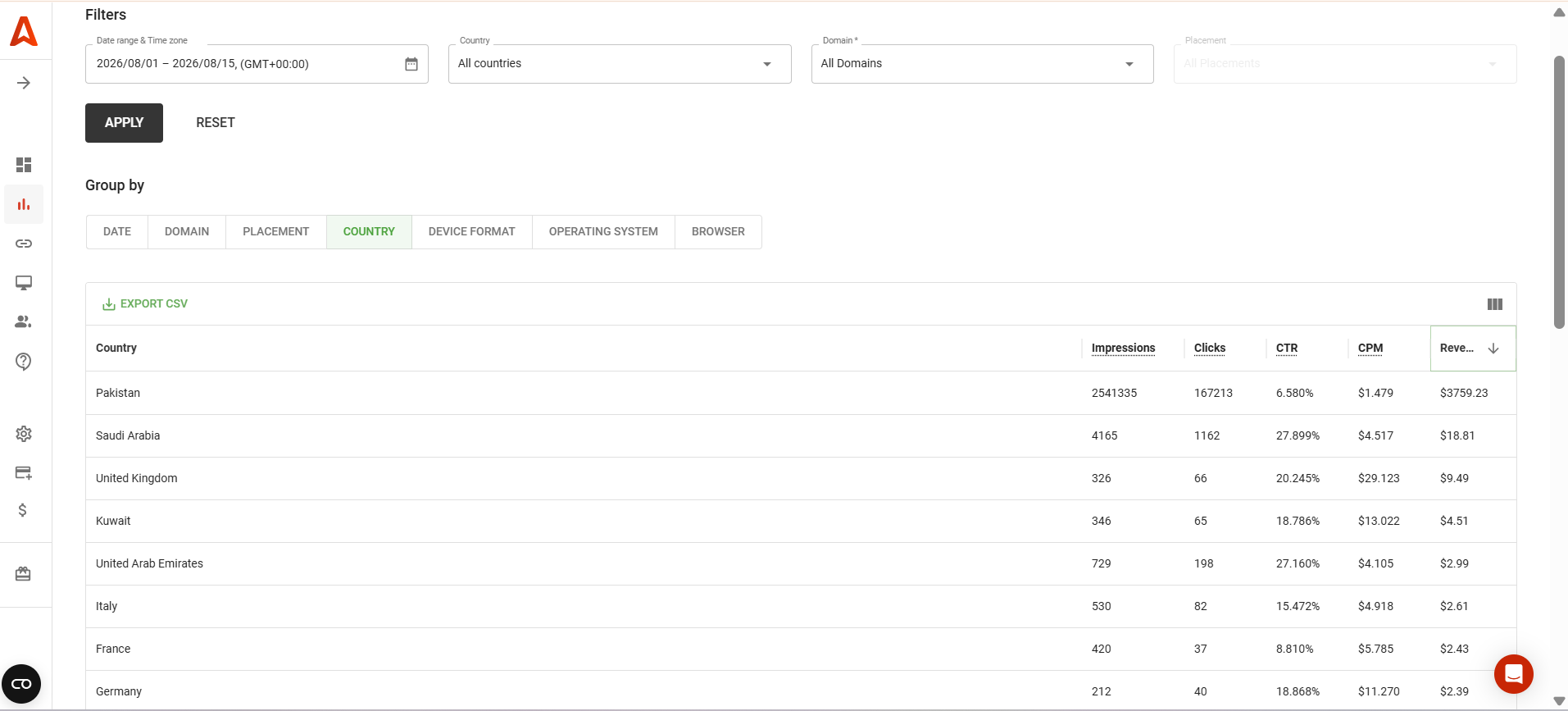
Pakistan was by far our main GEO. For August 1–15, the Adsterra report shows:
Pakistan
- 2,541,335 impressions
- 167,213 clicks
- 6.58% CTR
- $1.479 CPM
- $3,759.23 revenue
There was also smaller traffic from other countries:
Saudi Arabia
- 4,165 impressions
- $4.517 CPM
- $18.81 revenue
United Kingdom
- 326 impressions
- $29.123 CPM
- $9.49 revenue
Kuwait
- 346 impressions
- $13.022 CPM
- $4.51 revenue
United Arab Emirates
- 729 impressions
- $4.105 CPM
- $2.99 revenue
Italy
- 530 impressions
- $4.918 CPM
- $2.61 revenue
France
- 420 impressions
- $5.785 CPM
- $2.43 revenue
Germany
- 212 impressions
- $11.270 CPM
- $2.39 revenue
Pakistan generated almost all of the volume, while some of the smaller GEOs had higher CPMs but much lower traffic.
CPM rates
The main Pakistani traffic generated a $1.479 CPM during the period shown in the report. Some smaller GEOs had much higher CPMs. The highest CPM visible in this particular report was the UK at $29.123.
However, we don’t use the UK number as our “average” or main result because it came from only 326 impressions. For us, the Pakistani result is much more representative because it produced the overwhelming majority of the impressions and revenue, $3,759 in a week.
What happened during the traffic spike
Traffic rose modestly from July 28–31, then grew strongly from August 3, with the huge jump on August 6. Event blogging boosts website traffic quickly-our site went from near-zero to over two million impressions in a single day.
We measured engagement by tracking how long users stayed on the page, how many returned to the site, and how many comments and shares we received. We observed that many users accessed the site on mobile devices, and active usage peaked around the time of the announcement. Many users visited the site multiple times to look for updates.
A large increase in traffic for an event blog is usually temporary. On August 6, earnings began to decrease, but the site still generated substantial profit for several days. This result supports our prediction. It shows that a small blog that focuses on a specific topic can generate more profit than a larger site that covers many broad topics during a specific period.
Common beginner mistakes in event blogging
Most bloggers who fail don’t lack tools-they lack timing, topic choice, or content quality. Google algorithm updates can impact event blogging search rankings, so your content needs to be genuinely useful.
Bingo mistakes we used to make, and you will avoid:
- Waiting until the topic is already hot online.
- Trusting social hype instead of real search volume.
- Publishing thin pages, like 300 words, just to chase one keyword.
- Not checking mobile speed, or adding too many ads that get in the way.
- Writing headlines that sound like expert guidance, but then not backing it up.
- Leaving the page without updates when facts change the night before or even the same day.
We handled each point with early research, brief yet solid content, a mobile-first layout, ads kept at a reasonable level, and fast edits on the day of the event.
Final words and additional tips
Here’s the event blogging workflow we now stick to, and you, too, can use. Find the event early, validate real user demand, launch a lean event blog, publish a strong main page, add useful supporting content, optimize for mobile, search, and Discover, go live before the peak, update fast, and monetize with Adsterra.
Event blogging helps create user awareness in a short period of time and very openly. One event per quarter (national results day, sports finals, big New Year’s policy announcement) is enough prior to launching several events at once. No event is guaranteed to reach $3K/day, but consistent execution across well-chosen events builds a solid revenue stream. Event blogging can lead to an ongoing content engine rather than a one-day traffic spike.
Post-event recaps summarize main lessons and memorable quotes, helping you plan your future strategy. You don’t need to be part of the events industry. You just need to understand what users will search for and be ready when they do.
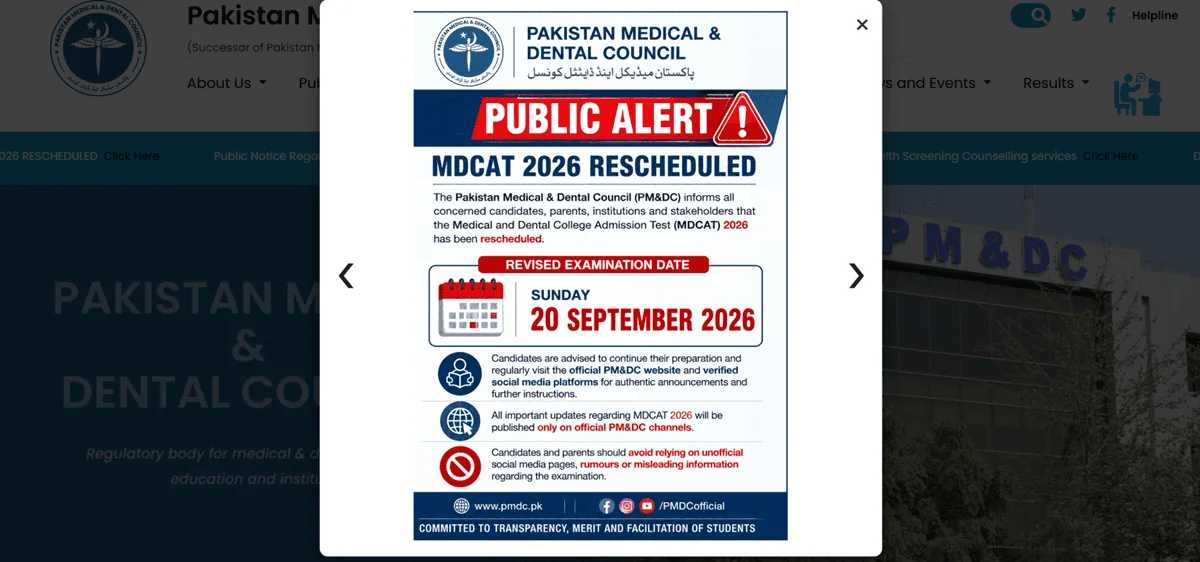
Pro tip: You can profit from rescheduled events, as well. Subscribe to updates on the websites or blogs of the news sources: federal and regional examination commissions, marketplaces, and sports organizations. Sometimes, you get a bonus month to drive and monetize high-intent traffic.
FAQ
How early should I register my domain and set up my event blog?
When it comes to recurring events, it is ideal to register the domain and set up a simple website 3-5 months before the event so that search engines have time to trust the domain and make sure that all technical problems are resolved before traffic spikes. If it’s a completely new event, it is better to start posting content at least 3-4 weeks before the date instead of waiting until the event becomes popular.
Can I handle more than one event blog if I’m a beginner?
Begin with one event blog and one campaign. If you want to cover more, pick events that are similar so the research is easier. Trying 2 to 3 totally different events in a year is usually a later step. Do that only after you finish one full round, and you know what the work feels like. Extra blogs and sites pay off only if you keep them clean, update them often, and keep money coming in steadily.
Do I need a large budget to use the necessary tools and production stack?
You can start with a domain and simple hosting. You can also use free tools, like Google Trends and Google Search Console. In most cases, the real cost is your time and when you publish. The Adsterra monetization setup doesn’t require any fees. You can earn from ad views once ads are live. Later, you can add paid tools such as SEMrush once revenue starts to grow.
Which ad format is best for event blogs?
Start with Popunder if the event is short, and you expect heavy traffic. Social Bar and Native Banners work in a less pushy way. They also tend to fit mobile better, and you can run them together with Popunder. Test each format for a few days. Then check the numbers in your Adsterra dashboard, like Impressions, CTR, CPM, and Revenue. Stick with the mix that brings in good results without hurting engagement.
What happens to my event blog when the event starts?
Visits often fall fast after the spike. Still, some search interest stays for a while. This can last for weeks, depending on what people are looking for. You can reuse the same domain for the next round of the event. Or you can add related evergreen posts so the blog keeps pulling in visitors. Think of each campaign as a chance to learn. Look at what worked, carry those practical steps into the next event, and keep improving the site until it becomes a reliable content source.
Difference between event blogging and event technology
Event technologies include all sorts of methods for planning and managing events themselves: you organize, promote, and monetize an event. Event professionals are responsible for budgeting, attracting attendees, exhibitors, artists, or speakers. Bloggers only monetize the content they create around a specific event.
What’s critical in event planning and organization?
The event planning space spans from initial planning, budgeting, and marketing to ultra-modern lead generation. For example, in the events industry, personalization is crucial for success in 2026. Personalized lead forms and special offers (e.g., for returning users) enhance attendee engagement and simplify planning.
How to drive traffic to an event blog in the zero-click environment?
This is becoming a bigger challenge because Google is answering more questions directly in its AI Overviews. No need to click? Not exactly. The answer is to target queries where users still need to visit a website to complete the task. Don’t just pick broad questions. Focus on cases where the person is trying to verify something. They might want a fresh list, a posted timetable, a specific answer, or something that depends on where they are. The headline matters a lot, so keep it honest, not trying to manipulate user click intent. Ensure the headline tells readers exactly what they will get when they tap.