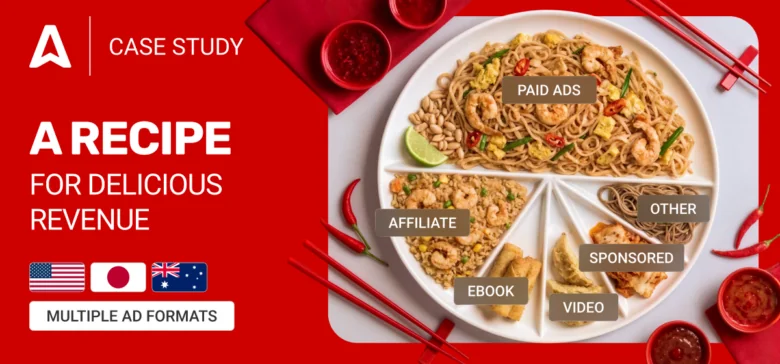
If you’re wondering how to make money online with a food blog, watch real examples. Sara started blogging in March 2019 as a passion project while working night shifts as a support manager. She shared free recipes with peers and friends who loved her holiday bakery, never expecting her blog to eventually replace her salary. Sara’s site now generates $20,000–$22,000/month, with roughly 60–70% of that income coming from paid ads.
You’ll learn which milestones unlock which types of monetization, how to mix display advertising with other income streams, and why a food blog can’t monetize with any ad network.
Sara’s food blog makes money from a bunch of sources:
Successful food bloggers often diversify income sources to stabilize earnings, and Sara is no exception. Her portfolio of income sources consists of at least three primary and two secondary channels.
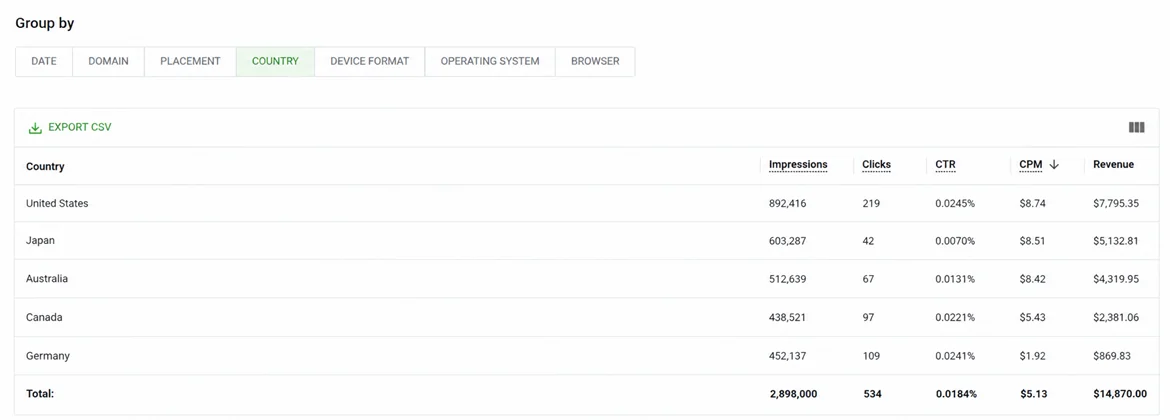
- Display ads & Social Bar formats (~67.6% – 67.9%): $13,580 – $14,870
- Affiliate marketing & commissions (20%): $4,000 – $4,400
- Sponsored content & brand deals (10%): $2,000 – $2,200
- Recorded video cooking classes promoted via free lessons on YouTube (~1.1%): $230
- Selling own products (PDFs & Cookbooks) (~0.9% – 1.4%): $190 – $300
Opinion: You shouldn’t start a food blog just for the money
Sara blogged for 14 months before gaining $80. Every blog post took 12–15 hours of recipe testing, food photography, writing, and SEO optimization. The income was essentially zero. The main driver was far from “how to monetize a food blog” but more about becoming a pro in cooking and blogging.
She was inspired because of her passion for learning to cook and her desire to become a nutritionist. High-quality, non-AI-generated food photography keeps more blog visitors longer, and Sara invested in learning lighting and styling from day one. She did this to keep her meals tasty to watch.
Sara also focused on creating unique recipes for Asian meals. She decided to remaster classic recipes by adding healthy ingredients such as gluten‑free flour, fiber, and healthy fats. Keto buns, sugar‑free pancakes, and even low‑calorie pies appeared in the food blog.
Examples of Sara’s early posts that later became her highest earners:
- “Japanese Beef Curry VS Lasagna” now earns $400+/month in ad revenue.
- “5-Ingredient Weeknight Curries” is her most-shared post, driving consistent organic visits.
- “Crispy Sesame Tofu Bowl”, a favorite recipe among her readers that still ranks on page one
- “Bánh Tráng Nướng with 30 grams of easily digestible protein per serving” is one of the latest leaders.
Passion checkpoints before getting obsessed with CPM rates
Sara believes food blogging requires commitment, and advises you to ask yourself these questions before you create your own recipe blog for monetization.
- Do you enjoy creating recipes and writing about food? You can love cooking but hate content writing. Maybe a video blog will solve this dilemma?
- Are you ready to spend months building a stable readership before seeing real money?
- Can you carry on food blogging fulfilling even without a significant audience?
- Can you commit to consistent publishing for at least a year?
- Are you ready to test various sources of online monetization?
Case study snapshot: How much money can a food blogger really make?
Sara’s gross income timeline proves that food blogging is still a viable monetization path, but only once you have enough time and writing stamina.
| Year | User sessions | Ad Revenue |
| 2019 Q1–Q3 | Under 10K | $0 |
| Aug 2020 | ~50K | $250 |
| Feb 2021 | ~100K | $2,300 |
| Nov 2021 | ~200K | $7,800 |
| End-2023 | ~450K-700K | $15,000–$18,000 |
| 2025-2026 | ~1M-3M (peak) | $20,000–$22,000 |
Sara’s current income mix: 67% display ads and paid ad formats, 20% affiliate marketing, 10% brand deals, 10% selling online products (e-cookbooks, meal plans), and 5–10% cooking classes.
Facts about food blogs making money
Most full-time food bloggers who reach in the 250,000- 550,000 sessions/month range and use the proper monetizing channels can earn $5,000-$10,000/month. But be careful: 30-50% of profit is lost to groceries, hosting, camera equipment, assistants, and taxes. A combination of income streams is another direct way to increase CPM and revenue, while protecting bloggers from sudden drops. For example, 40% of Tiffy Cooks’ income comes from display ads (an estimate similar to Sara’s).
Conventional display advertising can generate an average $1-$3 CPM for food blogs through the most common networks, but the more relevant networks premium bloggers use, the higher the monetization rates can be. For instance, a Vietnamese street-food blog makes $15,000 from Popunder advertising alone; in this case, the targeted readers are generally, though not exclusively, Americans and Europeans. On the other hand, sponsored posts can make from $50 to $10,000, depending on reader reach and niche domain.
Get the foundations right: niche, platforms, and traffic goals
A generic food blog is a poor strategy. Sara deliberately chose a specific niche: redesigned Asian meals. One of the first blog categories was “30-Minute Asian-Inspired Weeknight Dinners.” She also replicated viral food trends captured on the TikTok app and Instagram and recreated recipes from popular movies, anime, and TV shows.
A narrow blog category with high-demand content made SEO targeting, audience building, and monetization more transparent for Sara.
A quick checklist for placing ads according to traffic:
- 50K monthly pageviews: Test basic display ads such as Native Banners, start placing early affiliate links, and track ad impressions vs CTR. If either impressions or CTR are low, test another placement. Note: AdSense and a ton of its competitors often require minimum traffic for publishers to become eligible. Even at this stage, you can sell sponsored content.
- 200K pageviews: Move up to more robust display advertising and test additional formats like Popunders.
- 500K+ pageviews: Qualify for premium affiliate or referral programs; collect helpful data for negotiating premium brand deals.
- 1M+ pageviews: You can either try selling views via RTB or carry on optimizing revenue sources. Example: Focus only on high-income geos (not necessarily the highest-CPM winners), look for seasonal trends, and define the best ad placements.
Growing the audience: SEO and content distribution
Sara spent two years consistently publishing two to three quality recipes per week, from April 2019 to December 2020. Rather than taking a shotgun approach to trying to hit up to 10K keywords, she opted to aim for specific keyword-optimized phrasing, such as “20-minute sesame chicken rice bowl” and “quick vegetarian weeknight stir-fry.” And this is just what she explains to you.
A practical SEO approach includes:
- Long-tail keyword research using free tools such as Google Keyword Planner, Keyword.io, and KW Explorer by Allintitle. Or, you can even check search results on Reddit. Look for “keto,” “low-carb,” “gluten-free,” and “high-protein” tails, as well.
- Structured headings (H1, H2, H3) and recipe schema markup.
- Compressed, fast-loading images with descriptive alt tags.
- Internal links from new recipes to older related posts, and from navigational vast-topic guides to relevant recipe pages.
- Auditing competitors’ top posts to find content (and keyword) gaps.
Content creation and distribution
Sara diversified content formats. Step-by-step photo tutorials, short recipe videos, and printable recipe cards increased time on page and ad impressions. Optimized content increases website traffic significantly, and she saw proof of that as her best recipes climbed search rankings month over month.
Pinterest can highly motivate visitors to food blogs, and Sara used it full blast during her first year. Content repurposing on multiple platforms can increase traffic and sponsorship opportunities, so she also created short videos for social media alongside her written posts.
It took roughly 18–20 months for Google search to become her dominant source, which is when display advertising finally became worthwhile at scale.
Building the groundwork without ruining UX
Sara didn’t start monetizing, including ads, until she reached about 50,000 pageviews per month in mid 2020. She ran a test with AdSense, starting with 2-3 placements with little impact, to get an initial baseline RPM reading. Her initial earnings were small, but CPMs were strong: 35K pageviews, an AdSense RPM of $2.50+, and $87 a month. She knew a food blog could earn $329/month with display ads, so she played the long game.
What beginner bloggers should focus on at this stage:
- Building an email list is key for promoting new content and products. Sara started collecting emails with a simple “7-Day Dinner Plan” PDF giveaway.
- Schedule some quick affiliate links for popular household items you use regularly (kitchenware, knives, rice cooker, delivery services) so you don’t clutter your posts.
- Display ads are typically placed in headers and sidebars, but you can also test in-content placements.
- Identify which placements generated the highest ad income (your network stats), and which pages received more clicks and got the highest time on reading. Do those overlap? If not, then consider how to improve that.
At this point it’s all about learning, and income is far from great. Sara’s fairly simple analytics immediately revealed that her most popular articles were comprehensive, 5-7 paragraph step-by-step weeknight dinners – the ones visitors scan for 2-3 minutes before bouncing out. This piece of info set the tone for what came next, and that’s where she began to earn consistently.
Enabling significant display advertising
Crossing ~250K monthly pageviews in January 2021 was a turning point. Sara changed AdSense to a more lucrative publisher network and started testing formats: classic banners in the header.
Key metrics for bloggers who monetize using paid advertising and affiliate links:
- CPM (cost per thousand impressions): how most food bloggers earn from display ads. You get paid each time ads load for readers.
- CPC (cost per click): you get paid when someone clicks on an advertisement.
- CPA (cost per action): you make money when a reader performs an action, such as registering for a service.
Example: Sara used Adsterra’s CPM/CPA pricing for broad site-wide display ads (Banners) and commission-based affiliate links around relevant verticals (meal-planning apps, grocery delivery, kitchen utilities) placed in non-recipe content like equipment reviews.
She ran two more A/B tests, shifting from 1 in-content ad unit per 600 words to 1 per 400 words and eliminating placements that resulted in in-content bounce rates over 30% to 40%. As 70% to 80% of her readers used mobile phones, she moved to a mobile-first layout and positioned all of her recipe cards and cooking timers on-screen without overlaps. If you hear other food bloggers talk about “more banners = more money,” that isn’t quite true.
How to choose a publisher network for display placements?
Not every food blog can monetize from advertising networks like Adsterra. Sara’s readership includes explorers, digital natives, and social media and app users. The blog attracts many Tier-1 expats from the US and the EU. Also, high-intent TV show fans come to check recreated meals from their favorite episodes. Such an audience is the best match for Pop and Banner formats promoting utilities, apps, movie streaming, and even iGaming offers.
Second, relatively conservative users (ads I want – only culinary offers) will convert less from off-topic offers (e.g., iGaming or SaaS). Conversions are important because advertisers pay more for them. If your readership is mostly US/EU citizens, aged 50 and above, fans of “classic” cuisine, you monetize mostly from affiliate links. Be cautious with additional monetization tools; start tests on one of your most-visited pages, then track daily sessions, duration, and visit depth.
Scaling further
By the middle of 2022, Sara’s blog had 250-300K pageviews a month. She needed revenue per page, greater CPMs, and increased control over format types than basic networks provided. Adsterra shined in this regard: fill rates at high bids from multiple advertisers and approachable managers who understood how to enhance Sara’s feed for improved revenue.
More ad formats on the food blog:
- An additional form of display ad in each recipe post: Sara placed Native ad blocks in every recipe page (in-content placement).
- Next, she placed Social Bar, a format designed as a discrete chat-messenger-styled notification.
Sara analyzed the metrics by placement and country from the Statistics table and discovered that her primary revenue sources were the US, Japan, Australia, Canada, and Germany. She then double-checked the GA4 report to ensure that visitors from these countries remained loyal after introducing new ads, noting bounce rates of 30% or lower.
Combining ads with affiliate marketing, brand deals, and digital products
Safety nets in revenue can be designed using several approaches. In this regard, Sara has chosen the path of diversifying income sources. This strategy suits bloggers with a mixed audience, but it also protects them against unexpected revenue drops or changes in channel performance.
Affiliate marketing commissions
Food bloggers can earn income from product recommendations. Affiliate links track purchases made through your blog, and programs like Amazon Associates are popular among bloggers. For example, Blendtec’s affiliate program pays an 8% commission, and affiliate marketing can yield an 8% commission on sales across many kitchen brands. Sara’s “Teriyaki Salmon for Two” post includes an affiliate link to her favorite non-stick pan and a Japanese pantry bundle, earning an extra $300/month on top of that one blog post’s ad revenue.
You can earn $300-$4,000 monthly selling third-party merchants’ products through affiliate programs: it’s a realistic target once you attract consistent audiences to your best recipes.
Digital products
Digital items with your own creative input can become your most profitable products. As a rule, cookbooks sell for $2-$40 and have great profit margins because they don’t include inventory costs. By selling digital products, bloggers can earn a healthy income. Sara came up with and launched a “$3.99 4-Week Weeknight Meal Plan” PDF. Later on, she began publishing her products, which included the complete eCookbook as well. Print cookbooks are usually accompanied by advances from publishing houses, royalties from books sold, and other payments. Besides, selling physical books can be a good way to strengthen customer loyalty and gradually increase income.
Brand partnerships
Direct advertising contracts are an excellent source of income for renowned bloggers. The brands are paying for content that features their products, and now and then Sara charges from $200 to $800 per sponsored blog post. Being a collaborator requires making sure that the brand is suitable for one’s personal brand. So she doesn’t accept deals to sell unhealthy food or products from unrelated companies.
Other revenue sources outside her blog include her freelancing skills, such as recipe development and food photography, which she can offer to third parties. For instance, as a freelance writer, she could have been earning $125 per post, and by selling a recipe to an outlet, she could get $85 for it. At this point, however, she hasn’t used her potential, and she hasn’t even had a membership, which would have given her access to regular subscription payments.
Optimizing email marketing and social media to feed your ad revenue
Email marketing
Email marketing helps engage audiences and increase traffic, making it one of her most valuable assets. Sara missed out on this option to earn income, and now plans to start from scratch. Her email list grew from 0 to 10,000 subscribers between 2022 and 2025 with only one lead magnet, “7-Day One-Pan Dinner Plan,” placed in the blog. The one significant earning example came in December 2023, when an email featuring “3 Holiday Noodle Dishes” added roughly $450 in incremental ad revenue through a sponsored offer.
Social media playbook for blog traffic:
Sara’s used all kinds of social media content formats — everything from Instagram Stories through TikTok, YouTube Shorts, even Pinterest — as discovery channels. That means driving people back to her own self-hosted website with display ads and affiliate links instead of relying on creator funds on these platforms.
She created very short videos specific to each platform (with “full recipe on my blog” links to get people to click). Pinterest alone drove 25% of her early traffic before organically SEO’ing itself into full bloom.
Sara’s conclusions about social media marketing: social media builds brand awareness; your blog is how you actually make sales. Every person who visits your site gets exposed to ad revenue. Every one that follows your content on social earns you almost nothing by comparison.
Fine-tuning: Page speed, layout, and seasonal monetization strategy
Sara converted all compressed food photography images to WebP and switched to a lightweight recipe card plugin.
Page load speeds dropped from 3.2 seconds down to under 1.8 seconds. Faster pages led to higher levels of user satisfaction (and therefore also viewable impressions), which bumped Sara’s Adsterra CPM up by about 10- 15% overall.
Sara plans content and testing 60–90 days before key food seasons – Thanksgiving, Christmas, Lunar New Year, back-to-school. She negotiates optimization twists with her manager at Adsterra, understanding exactly when she will be sending much more ad views.
Common mistakes food bloggers make with paid ads
Here are the mistakes Sara either made early and corrected, or deliberately avoided:
- Slapping banners on a brand-new site with almost no visitors. Many food bloggers do this. At 5K pageviews, you’ll earn almost nothing and train readers to associate your blog with clutter. Fix: Wait until 30K+ pageviews before testing serious display ads.
- Confusing engagement with intrusion. Sara tried promoting sponsored products via pop-ups, 3 per session. That was way too much, and readers’ bounces spiked within days. So, she had to replace pop-ups with softer in-content recommendations.
- Not matching advertising with the audience. Adsterra sends mainly entertainment and mobile software offers to Sara’s placements, as agreed at the start of the partnership. Some networks will expose all sorts of offers, making the blog noisy.
- Accepting irrelevant CPA offers. Just like monetization platforms, not every affiliate network can fit your blog. Sara has refused advertising for financial services and created a written policy listing which offers are not relevant.
- Ignoring mobile layout. With 75% of readers on phones, a misplaced sticky banner once covered her recipe card timer. She now tests every new format on three mobile devices before going live.
- Relying on a single income stream. If brand deals dry up or your affiliate marketing network reduces RevShare, your business is at risk. Sara added more income layers: paid advertising, digital products, and cooking classes as scalable upside. Many food bloggers also decide to explore freelancing and email marketing for additional stability.
Your monetization roadmap: Turning a food blog into a real business
Establishing this kind of roadmap might sound overly ambitious for companies launching their first product, but through the lens of food blogging, most bloggers can adapt this approach.
- Years 0–1: Niche selection, self-hosted or managed hosting option, 50–100 SEO-optimized recipe pages, basic subscriber list building. You don’t expect significant ad revenue.
- Year 2: 50–100K monthly sessions. Begin affiliate tests and first products (PDFs or micro-courses). Try adding display advertising or Popunder.
- Year 3: Enrich your monetization stack with Adsterra formats like Social Bar and Banners, and carefully tested Popunders. Launch cookbooks, meal plans, and cooking classes in parallel (optional).
- Year 4-5: A systematized business with partial team support, multiple stable income streams, and recurring revenue from evergreen content.
A recap of basic steps required to set up a food blog
- Launch a self-hosted food blog in a focused niche. You can also use WordPress or Blogger with custom domains.
- Post your first pages (About me, Contacts, Cookie statement, etc.) and run a test on mobile and desktop devices. Make sure all your layouts are readable and load fast.
- Publish 50–100 keyword-researched recipes with quality content and strong food photography. No time for learning how to shoot? Create helpful infographics and checklists using ChatGPT.
- Add light display ads at 50K+ pageviews to start making money from your visitors.
- Test more formats, track CPM rates by country and device.
- Layer on affiliate marketing, digital products, and selective brand deals.
- Optimize page speed, seasonal strategy, and advanced ad formats.
Think like a publisher! Each blog post or cooking class could earn you ad revenue year after year. Focus on growing traffic and producing high-quality content. View your blog like a business.
When your website approaches scale and you want to experiment with ad formats, look into what Adsterra offers on the publisher side. They’ve got flexible ad formats, real-time analytics, and competitive fill rates, which have helped Sara boost her revenues by over 35%, all at comparable levels of traffic.
Sara has come a long way from a passion project to a 5-figure food blog. And her story isn’t magic. It’s the result of consistently creating helpful content, respecting her readers, and layering smart monetization over time. We hope it proves that any publisher with true passion and diligence can build a real, sustainable business and earn income from their blogs. What will be your monetization mix? Register today and add at least one format!