
Most affiliates don’t lose money on bad offers, they lose it on traffic that never converts. Choose the wrong source for your offer, and your budget is burnt before a single sale arrives at the gates. On the other hand, the sources that perform are a short list, and none of them are secret.
For fast paid ROI, ad networks lead with In-Page Push ads, Popunder, and Social Bar. For free traffic that grows gradually, YouTube, SEO, forum communities, and social media do the heavy lifting. And the following article is a list of 20 sources of traffic that include 10 paid sources and 10 free sources of traffic for affiliate marketing.
The list provides information about why each one really values, how fast it works, and the niches it is most appropriate for in 2026-2027.
What is traffic source in affiliate marketing?
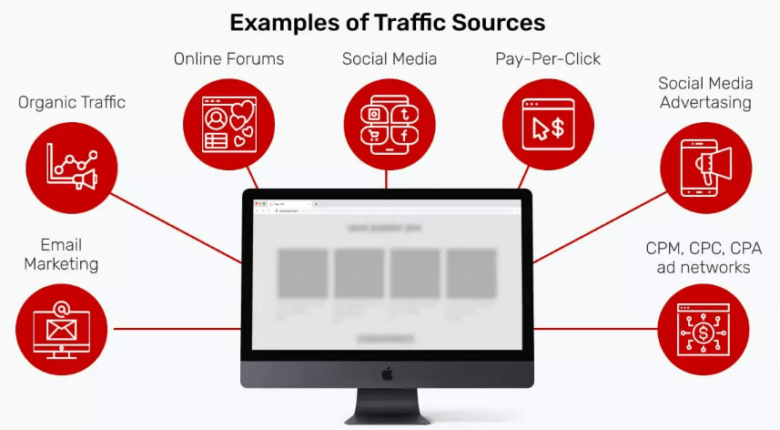
In affiliate marketing, a traffic source refers to any channel that can send visitors to an affiliate website. It is the medium through which people find a landing page or CPA offer you promote. In short, a traffic source is where your visitors come from.
Testing and monitoring free and paid traffic sources helps you understand what attracts users and focus on doing more of that to keep your budget safe from burning to ashes.
Traffic source explained
So if you buy 10,000 clicks from an ad network and send those users to an affiliate offer, the ad network is your traffic source. At the same time, the affiliate offer or advertiser you’re sending those users to is the destination or offer side.
Adsterra ad network works with over 36,000 direct publishers from 248 GEOs that can generate high-quality traffic for offers you promote. You can rely on Adsterra and benefit from the advanced ad formats with 33% higher CTRs than web push ads for your ad campaigns.
Free vs paid traffic, when to use, and where it comes from
Free traffic comes from channels where you don’t pay directly for each visitor. It is useful when you have a small budget or want to build a long-term audience, or have time to create content. However, results can be slower and harder to scale.
Below you have the exhaustive list of the best free traffic sites and sources for affiliate marketing:
| Free traffic source | How it generates affiliate traffic |
|---|---|
| SEO / organic search | Visitors discover your content through Google, Bing, and other search engines |
| Blogging | Niche articles, reviews, comparisons, tutorials, and guides attract interested readers |
| YouTube | Tutorials, reviews, Shorts, demonstrations, and comparisons generate video traffic |
| TikTok organic | Short-form videos, trends, demonstrations, and recommendations attract organic viewers |
| Instagram organic | Reels, Stories, posts, carousels, and profile links direct followers to content or offers |
| Facebook organic | Pages, groups, posts, and communities provide access to interest-based audiences |
| Pins, boards, and visual search can drive ongoing traffic to affiliate content | |
| Posts, articles, newsletters, and professional communities reach business-focused audiences | |
| X (Twitter) | Posts, threads, conversations, and shared links generate social and referral traffic |
| Relevant discussions and niche communities can generate targeted traffic where promotion is permitted | |
| Quora | Helpful answers to relevant questions can direct interested readers toward additional resources |
| Forums | Niche-specific discussions provide access to highly focused communities |
| Telegram | Channels and groups allow creators to distribute content and recommendations to subscribers |
| Discord | Niche servers and communities enable direct engagement with audiences sharing specific interests |
| WhatsApp communities | Permission-based groups and channels can distribute content to established audiences |
| Email newsletters | Regular newsletters bring subscribers back to your content and offers. Subscribers acquired organically create a reusable source of direct traffic |
| Podcasts | Recommendations, discussions, show notes, and episode mentions can direct listeners to offers |
| Guest blogging | Publishing on other websites exposes your content to established audiences |
| Referral traffic | Visitors arrive through links and mentions published on other websites |
| Backlinks | Relevant external links can generate direct visitors while also supporting organic search visibility |
| Online communities | Specialist groups and membership communities connect affiliates with niche audiences |
| Q&A websites | Answering relevant questions helps attract users already interested in a particular topic |
| Medium & publishing platforms | Educational, opinion, and niche articles can reach audiences beyond your own website |
| Free webinars & live streams | Educational sessions, demonstrations, and Q&As attract engaged audiences |
| User-generated content | Reviews, posts, discussions, and mentions created by users provide organic exposure |
| Viral & referral sharing | Audiences voluntarily share useful or entertaining content with other potential visitors |
| Direct traffic | Returning visitors access your website directly because they already know your brand or url |
Paid traffic comes from advertising platforms or ad networks where you pay for impressions, clicks, or visitors. Paid traffic is handy for quick results, predictable traffic, testing, and scalability. Affiliates usually employ paid traffic to quickly test offers.
Below you have the exhaustive list of the best traffic sources for conversions in affiliate marketing that are paid:
| Paid traffic source | How it generates affiliate traffic |
|---|---|
| Paid search (PPC) | Search ads on platforms such as Google Ads and Bing Ads reach users searching for specific keywords |
| Paid social media | Paid campaigns on Facebook, Instagram, TikTok, LinkedIn, X, Pinterest, and Snapchat target selected audiences |
| Native advertising | Sponsored ads match the style and format of surrounding publisher content |
| Display advertising | Banner, image, and rich-media ads generate traffic across websites and apps |
| Popunder ads | A landing page opens behind the user’s active browser window and becomes visible later |
| Popup ads | Promotional windows or overlays appear while users browse websites |
| Web push ads | Promotional messages are delivered to users who have opted in to receive browser or device notifications |
| In-Page Push ads | Push-style advertisements appear directly within webpages without requiring notification subscriptions on all devices |
| Interstitial ads | Full-screen advertisements appear between pages, content sections, or app screens and is less intrusive than popup |
| Video advertising | Pre-roll, mid-roll, post-roll, and in-feed video ads attract users through audiovisual content |
| YouTube ads | Paid video and other placements reach audiences across YouTube |
| Mobile advertising | Campaigns specifically target users browsing on smartphones and tablets |
| In-App advertising | Advertisements appear within mobile apps, games, and other application environments |
| Rewarded ads | Users receive an in-app reward or benefit in exchange for viewing or interacting with advertising |
| Programmatic advertising | Technology automatically purchases and serves digital advertising inventory based on campaign criteria |
| Contextual advertising | Ads are displayed alongside content related to the advertiser’s topic, product, or audience |
| Retargeting / remarketing | Advertising is shown to users who previously visited or interacted with a website, app, or campaign |
| Influencer advertising | Brands or affiliates pay creators to promote products through posts, videos, reviews, or recommendations |
| Sponsored content | Paid articles, reviews, guides, and other editorial-style content introduce audiences to promoted offers |
| Paid newsletter placements | Advertisements or sponsorships appear inside newsletters sent to established subscriber audiences |
| Paid forum / community promotions | Sponsored posts and placements reach users within relevant online communities |
| Direct media buys | Advertisers purchase placements directly from website owners, publishers, or media companies |
| Ad network traffic | Ad networks connect advertisers with traffic and placements across portfolios of websites and apps |
How to match sources to your niche and budget
To match a traffic source to your niche and budget, figure out where your target audience may spend time the most and how much you are willing to spend to test.
- For a small budget, start with lower-cost sources or free traffic such as SEO, social media, blogs, or communities.
- For a larger budget, paid sources, search, social, push, display, or pop traffic can provide faster testing and scaling.
Also match the source to the niche. For example, e-commerce visual products may perform well on Instagram or TikTok, while Technology and iGaming offers may fit display advertising better.
Ensure traffic costs, audience quality, targeting options, conversion rate, and ROI before scaling.
Best paid traffic sources for affiliate marketing
An affiliate marketer requires organic traffic as well as paid traffic. Paid traffic source is the one that helps generate traffic to your product’s page QUICKLY. And you can always pay for traffic by using the pricing model that fits your goals: cost-per-click, cost-per-mille, cost-per-action, pay-per-click, and so on.
1. Push traffic
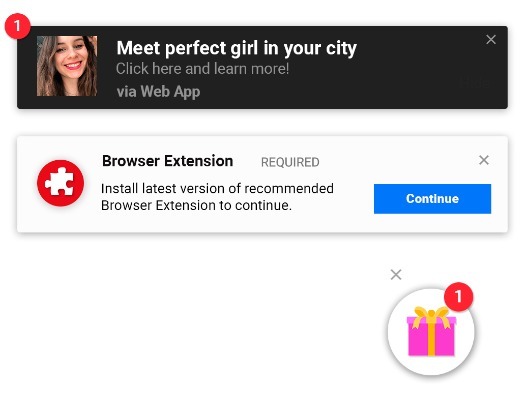
Check our affiliate case study on In-Page Push traffic:
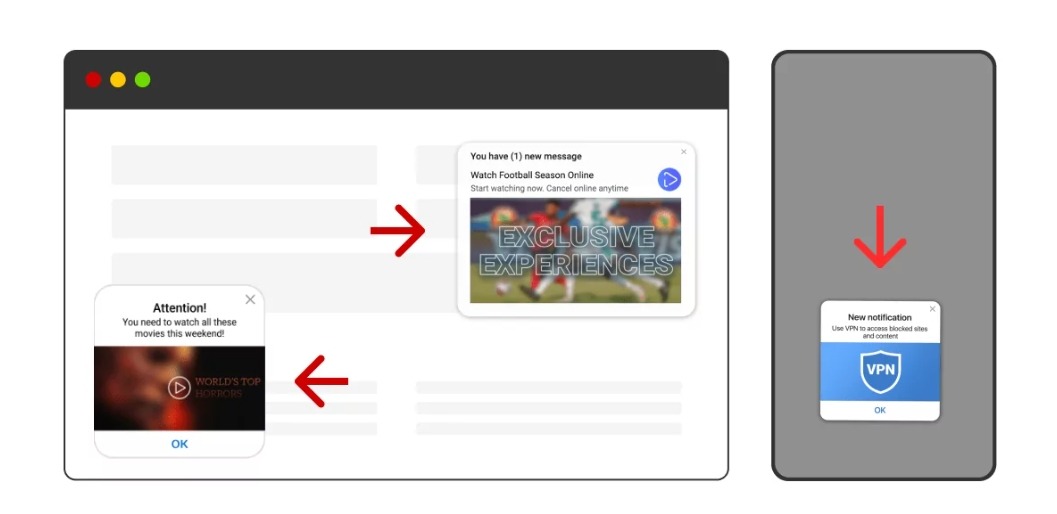
Web push format advertising means delivering ads in the form of push notifications. Push ads are the perfect blend of non-intrusiveness, user-friendliness, and visual appeal, enabling you to easily grab the viewer’s attention.
Push traffic is still effective. Its coverage and cost-per-click rate can be efficient. Though user intent may not be as strong compared to that of search traffic. Push traffic and ads can not always reach the audience as opt-in permission is required from every user for the ads to be shown. Effective creatives, proper targeting, frequency capping, and optimization are critical.
Best suited for: Apps, utilities, entertainment, sweepstakes, social & dating, iGaming, and selected finance offers.
2. Social Bar traffic

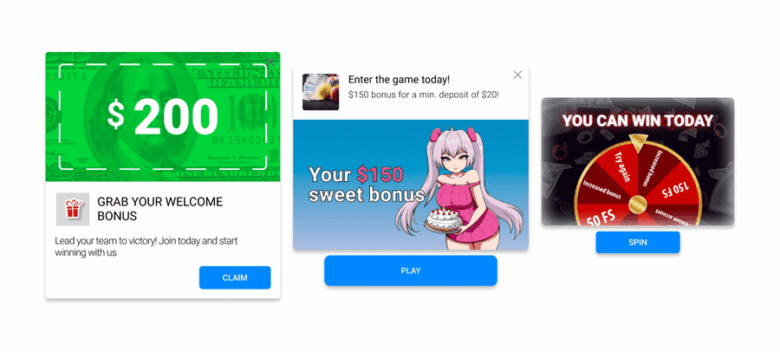
Social Bar ads with different skin types is the new generation push format. It captures attention directly on websites without requiring users to subscribe to notifications, meaning much less friction, more reach.
Best suited for: Apps, utilities, entertainment, iGaming, subscriptions, social & dating, software, sweepstakes, and broad consumer offers.
Social Bar has the proven 33% higher CTRs than web push ads. Here is how the average CTR looks like by offer verticals for Social Bar ads, according to Adsterra’s benchmarks.
| Vertical | Average CTR |
| Utility | 33.0% |
| Sweepstakes | 24.0% |
| Mobile Subscriptions | 23.0% |
| E-commerce | 22.0% |
| Antivirus | 22.0% |
| Finance | 26.0% |
| iGaming | 13.8% |
| VPN | 13.5% |
| Software | 19.9% |
If you’re an affiliate looking for high-converting traffic sources, Adsterra is your surefire choice. It drives traffic from 248 GEOs and has the unique Partner Care Program. We send 36 billion+ ad impressions from selected publishers’ websites monthly.
3. Banner ads
Banner advertising provides broad exposure across websites and apps. It’s an image with a hyperlink that leads anyone who clicks on it to an external url. It is the most common type of ad that you can use anywhere, including on websites, social media, and even email. The key is to design an eye-catching ad using the right mix of images and text.
Since users can become accustomed to display advertising and experience ad fatigue, affiliates need strong visuals, clear messages, and regular creative testing. The best positions for banner ads are usually at the top or left side of a web page, where people are likely to see them.
Best suited for: E-commerce, iGaming, social & dating, finance, apps, and brand-focused offers.
4. Native advertising
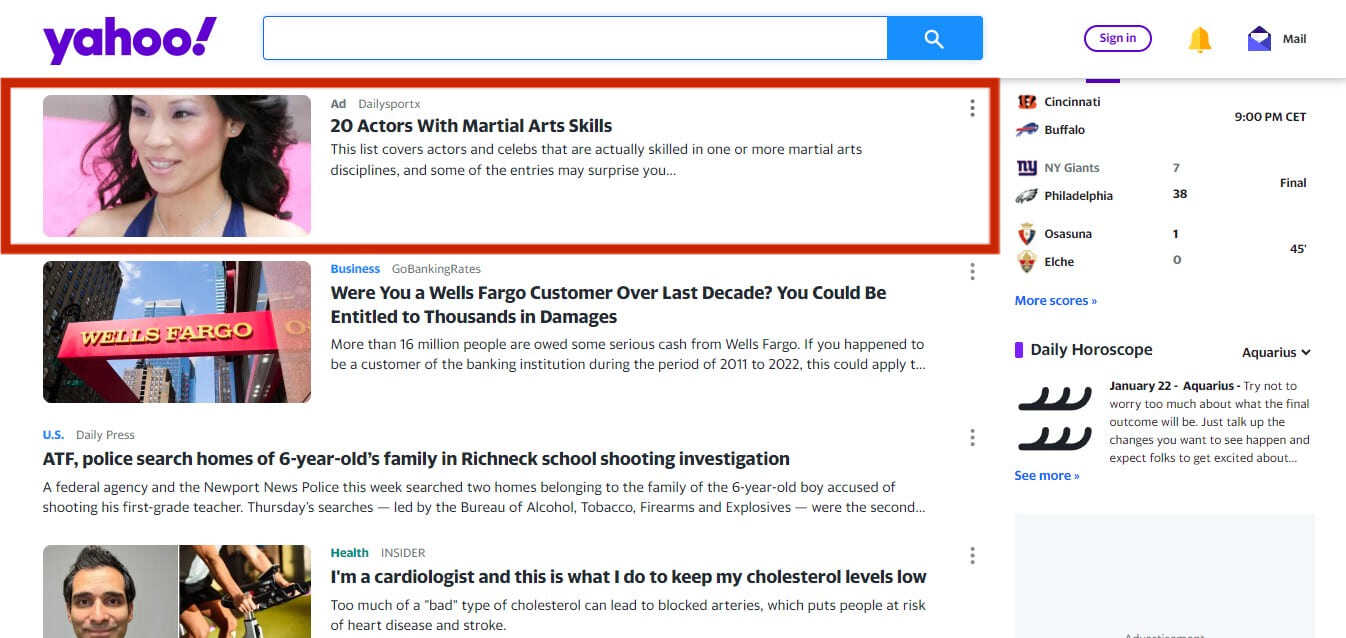
Native advertisements match the look and feel of your website. They resonate with your traffic source’s audience and don’t have the perceived intrusiveness of many other types of ads.
Best suited for: Finance, e-commerce, health and wellness, subscriptions, education, and content-driven offers.
5. Pop traffic
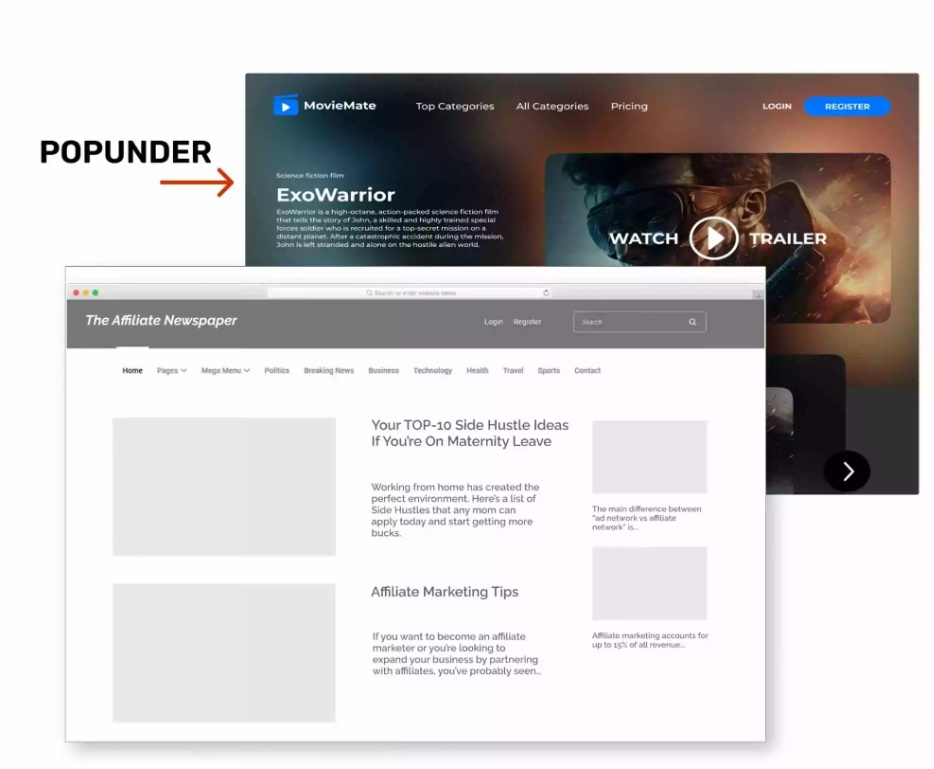
Pop traffic provides large volumes at relatively low costs, making it attractive for testing and scaling. Because user intent is generally lower with Popunder traffic, affiliates should prioritize fast landing pages, pre-landers, and targeting. There is a major difference within pop traffic: Popunder ads are usually more effective than Popups because they do not cause interruptions and hide beneath the main browser, until the user is finished with the main page and is ready to consume Popunder ad.
Best suited for: Utilities, apps, iGaming, sports, entertainment, social & dating, sweepstakes, and simple conversion funnels.
Check our affiliate case study on increased conversion with Popunder traffic:
6. Video marketing
You can use videos to advertise third-party affiliate products. Videos are more likely to capture a reader’s attention than images and text, so use the opportunity to impress the reader and clearly state what your product is. Note that video ads tend to cost much more than other types of ads, so it’s not suitable for beginner affiliates.
Best suited for: E-commerce, apps, iGaming, education, software, beauty, fitness, and consumer products.
7. Paid search ads
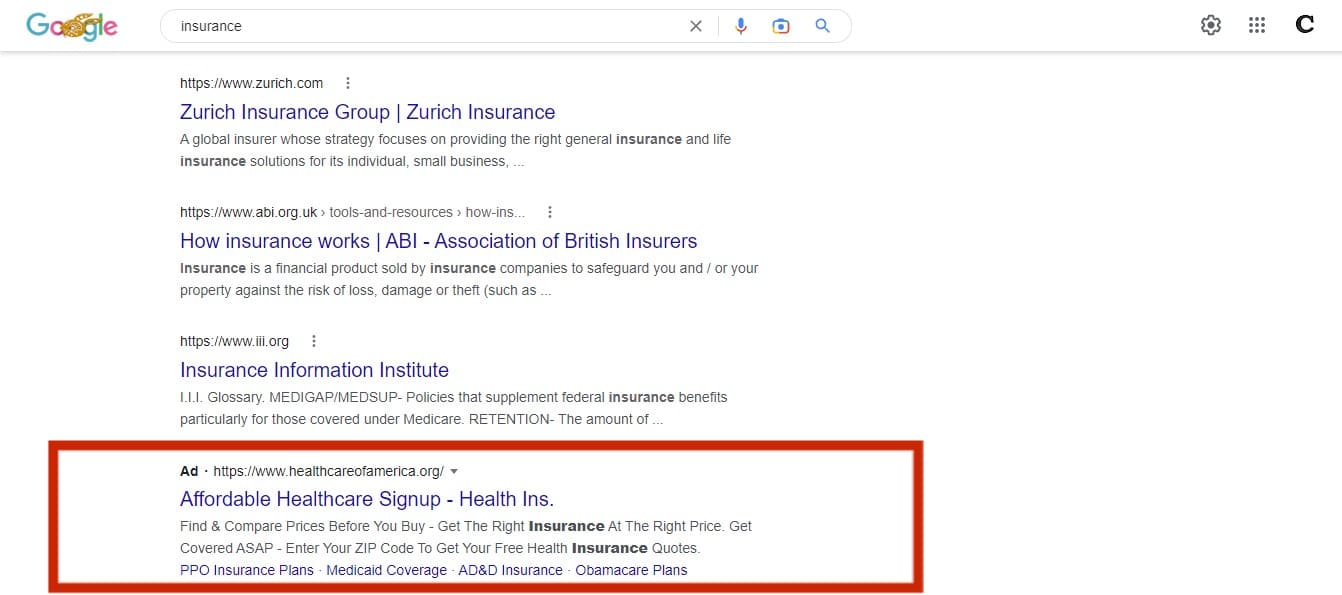
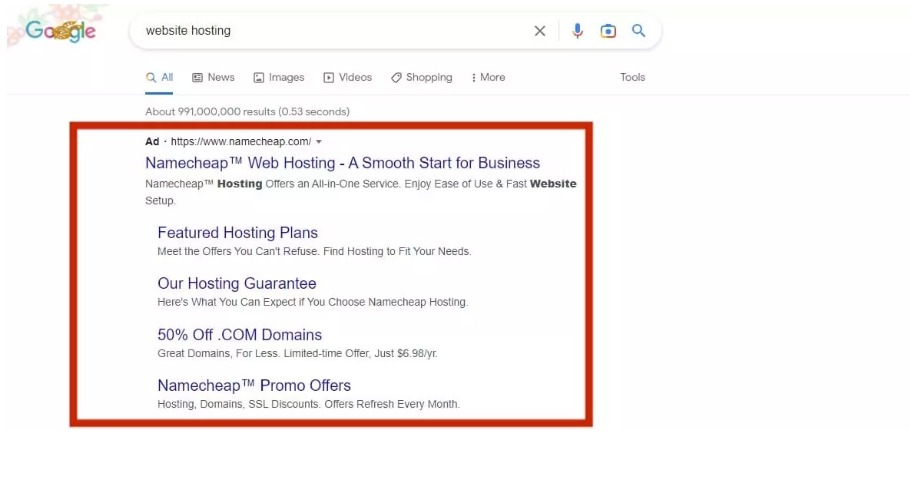
Paid search reaches people actively looking for a product, service, or solution, potentially delivering high-intent traffic. You can use Google Ads and Bing Ads, though there are real good alternatives to Google Ads. Here, you pay only when someone clicks on your ad. You can bid for specific keywords, and your link will show when a person searches for them.
However, bidding for commonly searched terms like “insurance”, “medical services”, and others is fiercely competitive and drives up the price for intending advertisers. Affiliates should carefully evaluate keyword costs, competition, and platform policies.
Best suited for: Finance, SaaS, software, travel, education, local services, and e-commerce.
8. Paid email traffic
Email is one of the best approaches to affiliate marketing traffic sources, but it’s often overlooked. You can advertise in email newsletters that match your desired target audience. For example, if you’re promoting a finance app, you can advertise on newsletters dedicated to stock market investing, which will likely drive additional traffic and visitors to your offers.
You can purchase exposure through newsletter sponsorships and dedicated email placements. Audience relevance and list quality are generally more valuable than sheer subscriber numbers.
You can also build your own email newsletters and share affiliate links in them. However, this method takes much longer than paying to advertise in existing newsletters.
Best suited for: E-commerce, SaaS, finance, education, subscriptions, travel, and niche products with established audiences.
9. Social media ads

You can advertise on popular social networks like Instagram, Reddit, X (formerly Twitter), LinkedIn, Facebook pages, etc., with detailed targeting and highly visual advertising formats. When someone clicks your display ad within social media campaigns, they’ll be redirected to your social media page or an external landing page. Billions of people use social media, so it’s a good approach to reach potential customers.
The best way to use social media for affiliate marketing is to write a product review and include direct affiliate links. Mind that most social media platforms don’t allow people to promote multiple affiliate links, even with disclosure.
Best suited for: E-commerce, apps, beauty, fashion, fitness, education, subscriptions, iGaming, and lead generation.
10. PPV traffic
PPV means pay-per-view. PPV traffic is an effective method of generating visitors for your affiliate campaign, especially if you’re advertising digital products. You can bid for specific sites to get the best results. You place ads with an advertising network and pay for each time a user views your ad (usually, a popup or a video). Affiliates need accurate tracking to establish whether inexpensive views ultimately translate into profitable conversions.
Best suited for: High-volume campaigns, entertainment, iGaming, utilities, apps, and relatively simple conversion funnels.
Publishers connected to Adsterra generate over 1 billion impressions daily, presenting an amazing opportunity to spread the word about your product.
Best free traffic sources for affiliate marketing
Now, it’s time to show you the best free traffic sources for affiliate marketing, the ones you don’t need to spend money on or the expenditure is minimal. They are mostly social media sites, online forums, and search engines. However, it’s harder to build up incoming traffic on these sources than on paid ones, so you must work creatively with them.
1. SEO traffic
If you’re using your affiliate website, product page, or blog for affiliate marketing, you can’t do without search engine optimization (SEO). Search engines are still the biggest drivers of traffic on the web, so it’s essential to do landing page optimization for high ranking and AI citations. Alternatively, you can go without a website and do a great job of it by checking our guide.
Each search engine has unique ranking algorithms. Some general rules to improve your website’s rank include using keywords, having backlinks, following search intent, and giving out useful content. SEO is a moving target. With rapidly evolving AI searches, you should ensure to stay on top of industry changes and adapt to them whatever vertical you are in.
SEO, and now GEO (Generative Engine Optimization) and AEO (Answer Engine Optimization) bring visitors to affiliate content through unpaid search engine results. It can take time to build rankings and AI visibility, but successful pages may continue generating targeted traffic for months or years.
Best suited for: Finance, SaaS, e-commerce, travel, education, software, hosting, and product comparisons.
2. YouTube
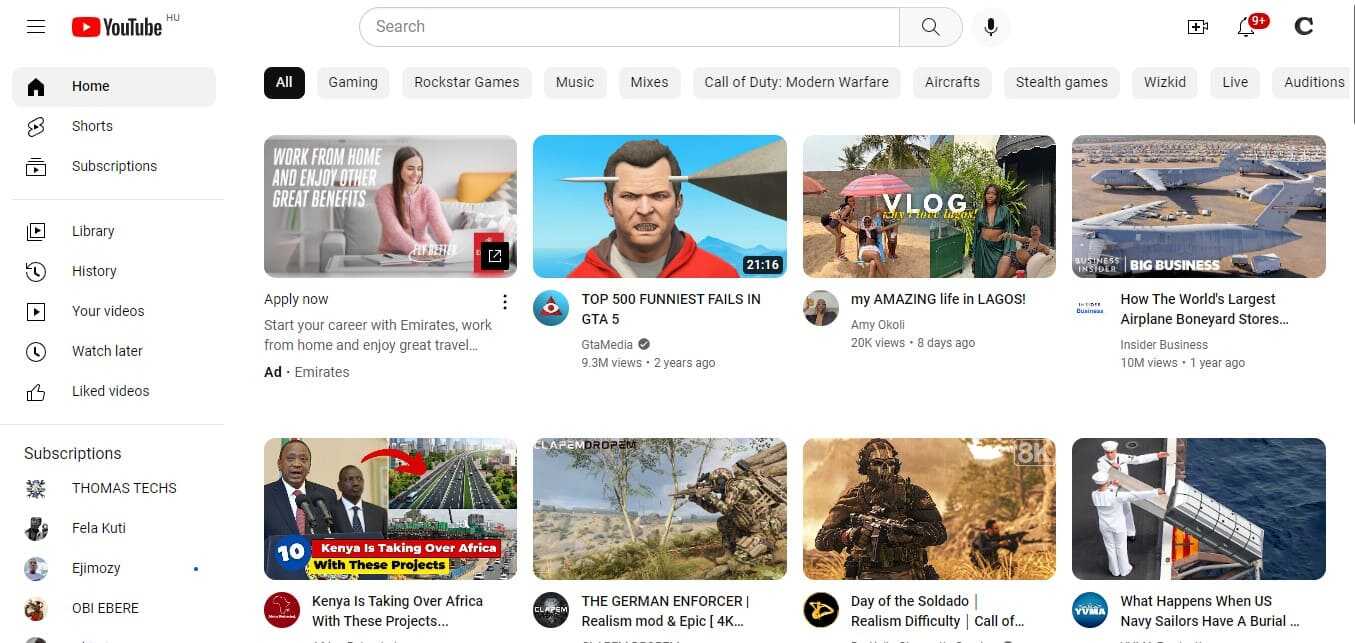
Almost everyone knows YouTube, the world’s most popular video-sharing site. Unlike many other platforms, YouTube’s algorithm won’t deprioritize your video if you post affiliate links in the description and promote affiliate offers. Thus, you can create engaging videos, reviews, tutorials, demonstrations, comparisons, and educational videos for your YouTube channel relevant to your affiliate product or service and include affiliate links to direct people to make a purchase. Videos can continue attracting viewers long after publication, particularly when they address topics people actively search for.
Best suited for: Technology, software, iGaming, beauty, fitness, education, e-commerce, apps, and consumer products.
3. TikTok
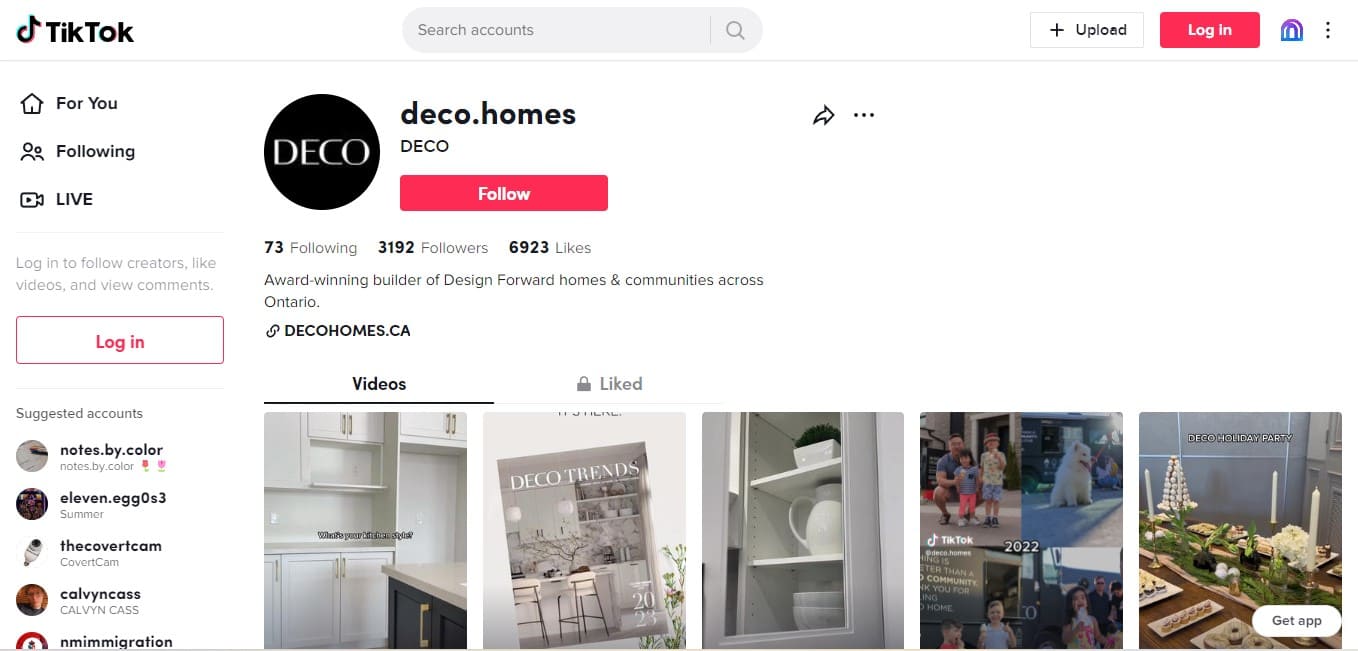
TikTok is the world’s most popular short-form video app, with over 1.9 billion users worldwide. It is renowned for its algorithm, which feeds users tailored videos they enjoy watching.
TikTok can generate substantial organic exposure. It is particularly useful for product discovery and trend-driven campaigns. Success usually depends on strong hooks, frequent experimentation, authenticity, that content designed for the platform brings.
You can create TikTok videos to promote your affiliate offers to the perfect target audience. This app doesn’t let you post links directly on non-sponsored posts, but you can post the link in your profile section and direct users to click on it.
Best suited for: Fashion, beauty, e-commerce, apps, iGaming, fitness, entertainment, and lifestyle products.
4. X (formerly Twitter)
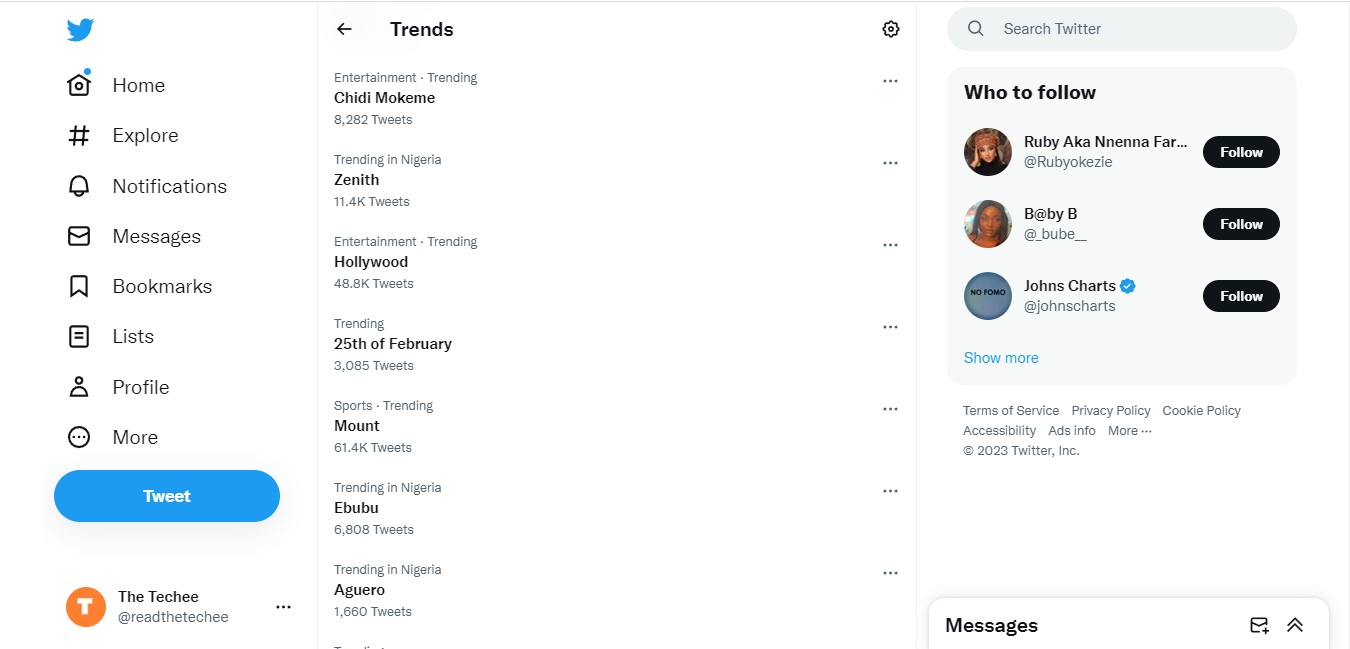
X (formerly Twitter) is one of the most popular social media platforms globally. It’s the first place people go to find out about global events or things happening close by. X users are all about conversations and don’t like being sold to, so just putting your links won’t suffice. You’ll need to add visuals related to the content behind the link.
Sometime, one of your tweets can blow up, and you can insert your links at the end of the viral thread. You can also add them to your bio, as you’ll do on TikTok.
Best suited for: SaaS, business, marketing, finance, technology, education, travel, and specialist niches.
5. Instagram
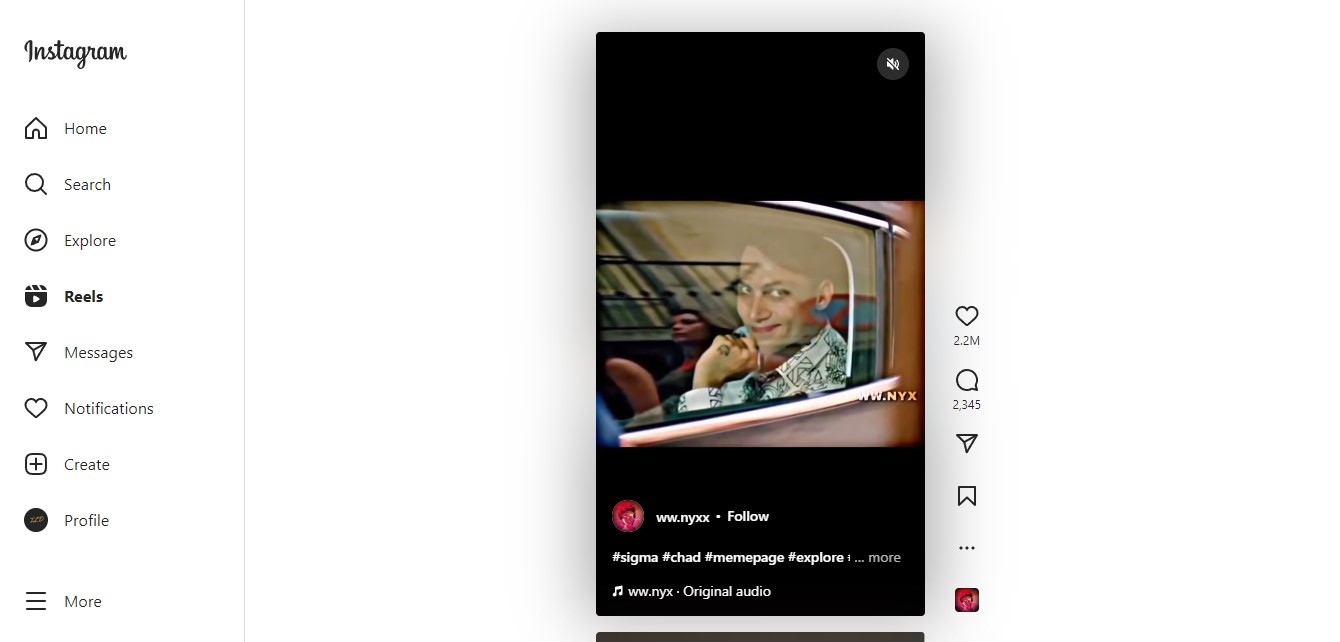
Instagram is a popular social media platform where users share images and videos. It has several organic ways to do affiliate marketing through Reels, Stories, posts, carousels, and profiles. To be a successful affiliate marketer on Instagram, you must first build a following rather than just throw links into your content. You can use hashtags and geotags to improve local discovery, get featured on already popular accounts, etc.
Afterward, you can post different types of visual content or create content like how-to guides with your affiliate links and also on your bio. Storytelling and consistent audience engagement are vital when it comes to creating trust and then recommending the products.
Best suited for: Fashion, beauty, travel, fitness, food, lifestyle, e-commerce, and consumer products.
Ready to crush it with affiliate marketing on Instagram? Follow Adsterra for quick tips, fresh ideas, and the latest trends to boost your success.
6. Pinterest
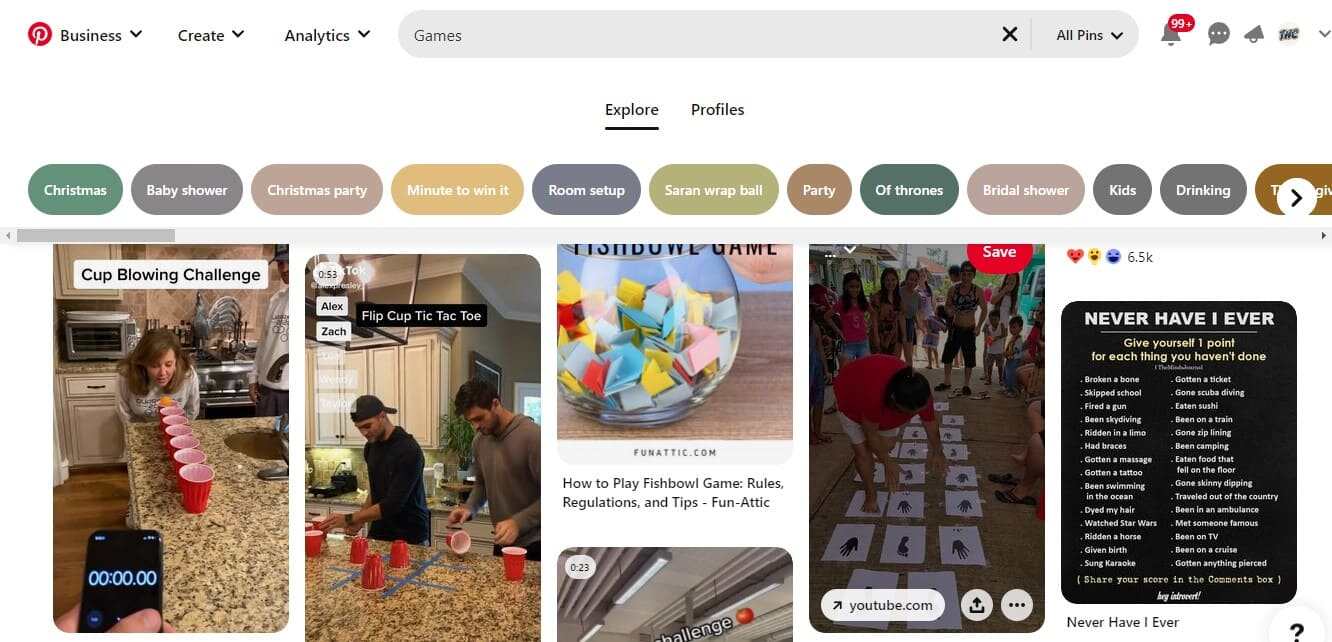
Pinterest is a social network that revolves around sharing ideas through “pins.” It acts as a visual discovery and search platform that enables pins to keep on driving traffic even after publication. Keyword-optimized titles, useful landing pages, and appealing visuals can make this happen.
The platform skews toward a female audience, but the gap is getting smaller as more men flock toward it. Many people use Pinterest to look for purchase ideas, so you can post your products as “pins” along with their affiliate links. Anyone who searches for product ideas may see your post and follow the affiliate link to purchase it.
Best suited for: Home, fashion, beauty, recipes, travel, weddings, DIY, fitness, and e-commerce.
7. Reddit
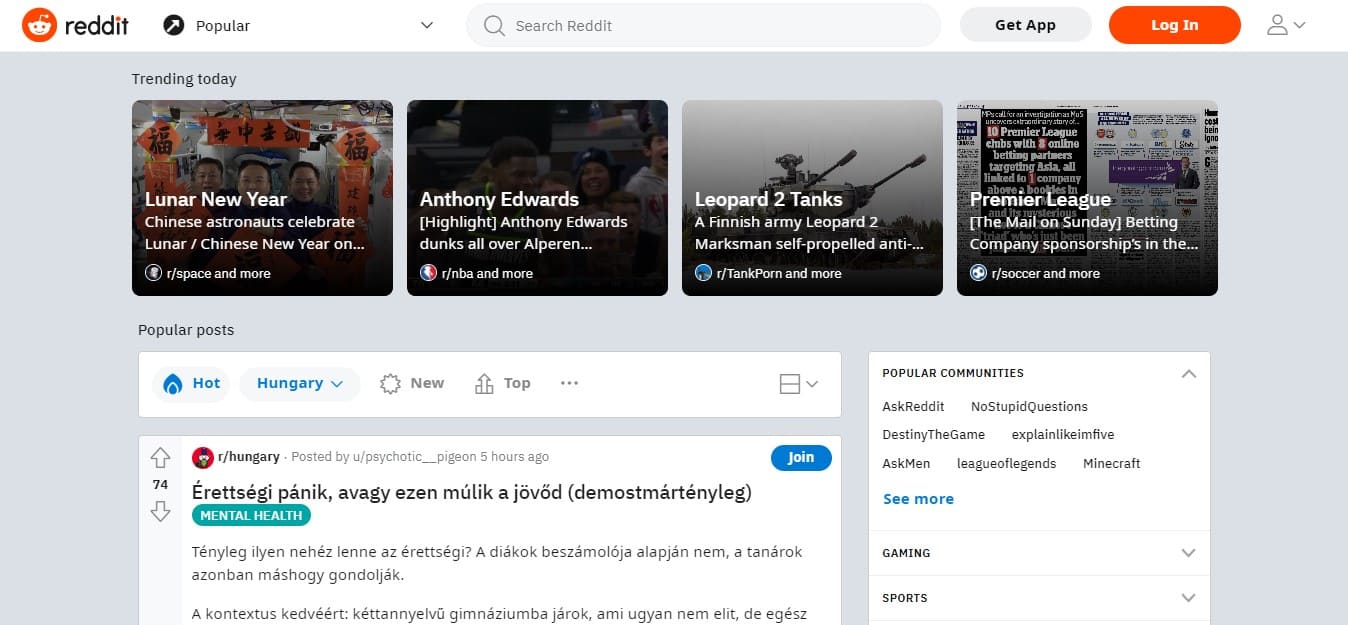
Reddit is a collection of forums hosted on a single domain name. Each individual forum is called a “subreddit,” and you can find one for virtually any topic out there. Reddit provides access to highly specific communities where people discuss products, problems, recommendations, and experiences. You can post your affiliate links, but some subreddits have clear rules against that and ban people who violate them. Ensure you post links only on subreddits that allow self-promotion, and even with that, don’t overdo it to avoid being marked as a spammer. Still, affiliates should prioritize genuinely useful participation rather than dropping promotional links.
Best suited for: Technology, iGaming, finance, software, hobbies, education, entertainment, and specialist niches.
8. Quora
Quora is a questions-and-answers site where people ask for help about various topics and get answers from other users. It lets affiliates attract traffic by answering questions related to their niche. You can answer questions related to your product category and slot in an affiliate link in them. Ensure that the link is relevant to the user’s question, which makes them more likely to click on it. Remember that the site’s purpose is to help users, not post random links, so play along. Detailed, genuinely helpful answers can establish expertise and direct interested readers toward additional resources where platform rules permit.
Best suited for: Software, finance, education, careers, business, technology, health information, and professional services.
9. Forums and online communities
If you’re into a particular activity, odds are there’s a forum dedicated to it. Like-minded people tend to congregate on forums to discuss relevant topics, presenting an opportunity for you to market your product. Niche forums provide access to highly focused audiences with established interests. Building credibility through useful discussions can generate referral traffic gradually.
For example, if you promote an affiliate offer of exercise gear, you can visit a fitness forum, sign up, join discussions, and occasionally include your affiliate links in them. Direct affiliate promotion may be restricted, so community guidelines should always come first.
Best suited for: iGaming, technology, hobbies, finance, travel, software, and specialist products.
10. Guest posting
Guest posting lets you inject affiliate links into your high-quality content, promoting your affiliate offers from affiliate networks or high ticket affiliate offers from brands. You can subtly showcase your expertise with a few tips drawn from your blog content, giving readers a reason to click through while getting direct traffic.
But guest posting isn’t only about the internal or external links. It’s also a great way to build genuine connections with bloggers and site owners in your affiliate marketing niche. These relationships can pay off in the form of referral traffic.
By planting your voice across niche-relevant platforms, you’re not just boosting SEO and getting more organic traffic, but leading specific audiences to your sales pages and building authority.
Best suited for: SaaS, business, marketing, finance, technology, education, travel, and specialized niches.
Speaking totally honest, “free” traffic is not completely free, since you exchange advertising spend for time, knowledge, content, and persistence. For future success as an affiliate marketer, focus on building channels through which you create assets and audience, then measure which one pays off better.
How to pick the right source for your offer
To pick the right traffic source for your affiliate offer, start by understanding the offer’s target audience, niche, GEO, and mainstream or niche traffic types to apply.
Choose a source where your target audience is active and where advertising costs make sense compared with the potential commission. For example, social traffic can suit visual or impulse-driven offers, while search traffic can work well when users already have strong intent.
Before investing heavily, test several sources with a controlled budget. Track CTR, conversion rate, CPA, revenue, and ROI in your advertiser’s account.
The best traffic source is ultimately the one that delivers quality conversions at a profitable cost, not simply the cheapest traffic.
Here is an average workflow for picking the source for your offer:
| Period | Step | What to do | Goal |
|---|---|---|---|
| Day 1 | Analyze offer | Check niche, GEO, audience, device and allowed traffic types | Understand what traffic you need |
| Days 2–3 | Research sources | Compare social, search, native, pop, SEO, etc. | Shortlist 2–3 sources |
| Days 4–7 | Prepare campaign | Create or fit creatives or landing pages and set tracking | Be ready to measure results |
| Week 2 | Do small tests | Run controlled tests on selected sources | Collect initial data |
| Week 3 | Monitor to optimize | Compare CTR, CPA, conversion rate and ROI | Identify the strongest source |
| Week 4 | Scale | Increase budget on profitable campaigns and cut weak ones | Grow profit |
| Monthly | Review | Re-test creatives, targeting, and alternative sources | Maintain performance |
Which sources fit which affiliate verticals
Different traffic sources suit different affiliate verticals because audiences behave differently across them. The best match depends on the offer, GEO, conversion goal, budget, user intent, and platform policies.
There is no universal source-to-vertical formula. But you can test relevant channels, compare CPA, conversion rate, and ROI, and scale the combinations that consistently generate profitable results.
Visual and consumer-focused verticals often work well with social media and video traffic, while offers requiring prior research or comparison can benefit from search, SEO, blogs, and YouTube.
High-volume offers with simple conversion flows may also suit push, popunder, display, and Social Bar traffic.
For niche or non-mainstream offers, ad networks with more flexible advertising policies and a greater number of acceptable verticals may prove to be more suitable than ad network traffic source with rigid guidelines. The affiliates must keep in mind that the campaigns should abide by the guidelines of the networks, advertiser demands, and regulations.
Check our affiliate case study on the traffic insights in the Social & Dating vertical:
Advanced traffic strategy with ad network traffic source
Once you’ve mastered the fundamental approaches, like SEO and organic traffic, social media, and guest posting, it’s time to tap into more sophisticated traffic sources that offer scalability and long-term ROI and can be a game changer.
Ad network traffic is one of the best traffic sources because it offers instant, scalable access to millions of users across websites, apps, and platforms worldwide within affiliate marketing activities. With advanced targeting settings, such as geo, device type, browser, OS, language, etc., you can reach the right audience at the right time.
Ad networks support a variety of ad formats, making it easy to match creatives to your funnel and optimize for more conversions. Some ad networks pay special attention to the notorious users’ ad fatigue and develop their own advanced high-converting formats.
With Adsterra, you can access the proprietary Social Bar ads that have up to 33% higher CTRs than web push ads. You can apply 20+ targeting settings, choose from 15+ creative templates and ad formats to test and implement for your ad campaign in your advertiser’s dashboard.
How to build a mix that grows through time
To build a traffic mix that grows through time, combine fast paid acquisition with channels that become stronger as you build content, data, and audience.
You can use paid traffic to generate quick data and discover what converts. Then, apply those insights to SEO, social media, YouTube, email lists, communities, and other owned channels.
Your content ranks, audience grows, and campaign data improves with time. Instead of constantly starting from zero, each campaign contributes knowledge and assets to the next.
Conclusion
With digital marketing, there are only two types of affiliate traffic: the kind that pays you back and the kind that quietly burns your budget. Telling them apart is the whole game. We’ve mentioned the most important factors to consider if you want to choose the most suitable traffic source. It takes some time to find your perfect source, target audience and focus on it, but you are on the right track already, by merely diving into and testing.
Affiliate traffic sources: FAQs
Which is the best traffic source for affiliate marketing?
There is no single best traffic source for affiliate marketing. The right choice depends on your offer, niche, GEO, audience, budget, and goals. Display, search, social, and pop traffic can perform well. Test multiple sources and scale those delivering profitable conversions.
Where can I get traffic for my affiliate links?
You can get traffic to affiliate links from numerous free and paid sources. Free sources include social media posts, search engine optimization to boost your own website rankings, posting on online forums, etc. Paid sources focus on buying different types of ads, such as In-Page Push and Social Bar to drive traffic to your affiliate offers.
What traffic sources offer the highest ROI for affiliate marketing campaigns?
SEO and email have potential to provide good long-term ROI as an already formed audience may “bring in traffic” repeatedly, which will not cost much. The paid search can also work well for high-intent keywords.
Can I use email marketing services to increase affiliate sales?
Yes, you can. Email can help boost affiliate sales by nurturing the subscribers rather than making one visit your website. Segment your subscribers and remember to check both email service provider’s policy and affiliate program’s policies for affiliate links.
What paid advertising platforms perform best for affiliate marketers?
Google Ads, Meta Ads, TikTok Ads, Bing Ads, and native advertising networks can all help you bring in affiliate traffic. However, the policies about the promotion of affiliates may vary from platform to platform. Choose according to your audience, niche, targeting options, advertising costs, and limitations on offers.
What are the top tools to analyze affiliate marketing traffic sources?
While Google Analytics can be used to track website acquisition and user behavior, affiliate analytics tools are more focused on clicks, conversions, campaign, and traffic source tracking. Different platforms can offer different benefits. Choose wisely, but keep in mind that accuracy of tracking is paramount. Another thing is using and matching a proxy to your traffic source. Proxies route your request through a real local IP address, so a platform displays for you what a local user sees and lets you validate offers, prices and creatives before you spend.
What are the most effective social media platforms for driving affiliate traffic?
TikTok and Instagram may be used to drive discovery via visual content, and YouTube may be used for video tutorials and reviews. Facebook may reach wide audiences. Choose platforms depending on the target audience, not on the ability to stay active on all of them at once.
How to get started with paid advertising for affiliate product promotions?
Start out with one offer and one traffic source. You can determine your audience, what your conversion goal is, how you will track it, and how much you are willing to spend per acquisition. Run several ads and landing pages and test out which combination works best.